
New type vacuum machine
12 month ago
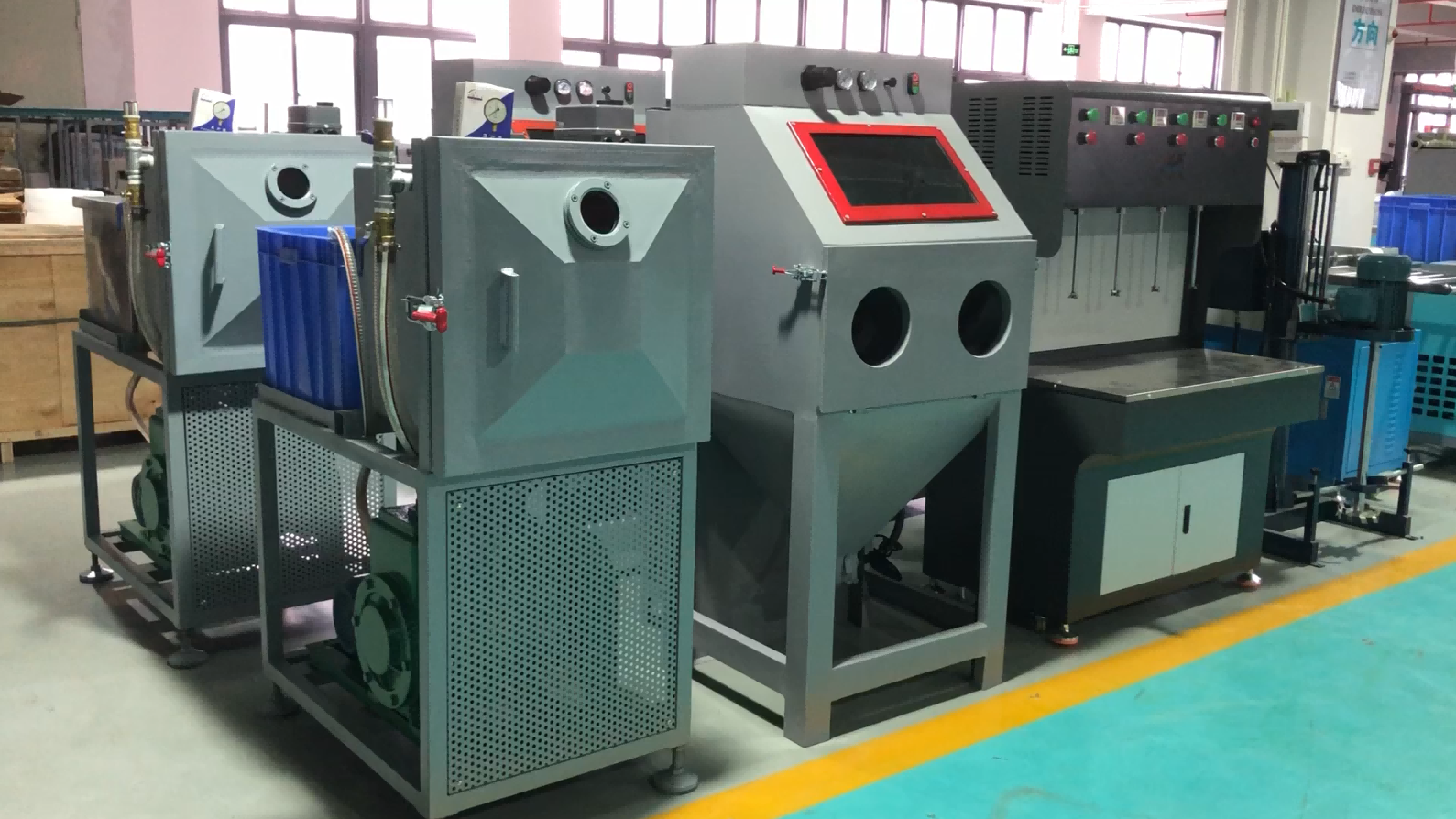
Liquid Silicone Rubber (LSR) Vacuum Defoaming Machine
A Liquid Silicone Rubber (LSR) Vacuum Defoaming Machine is an indispensable piece of front-end equipment in the processing of liquid silicone products. Its primary function is to completely eliminate microscopic air bubbles trapped within the silicone during raw material mixing, color tinting, or mechanical dispensing.
Due to the extremely high viscosity of LSR (typically ranging from tens of thousands to hundreds of thousands of $\text{mPa·s}$), trapped air cannot escape naturally by gravity. Without intensive vacuum defoaming, the molded products will suffer from defects such as blowholes, pinholes, short shots, internal voids, or surface cracking, leading to high rejection rates.
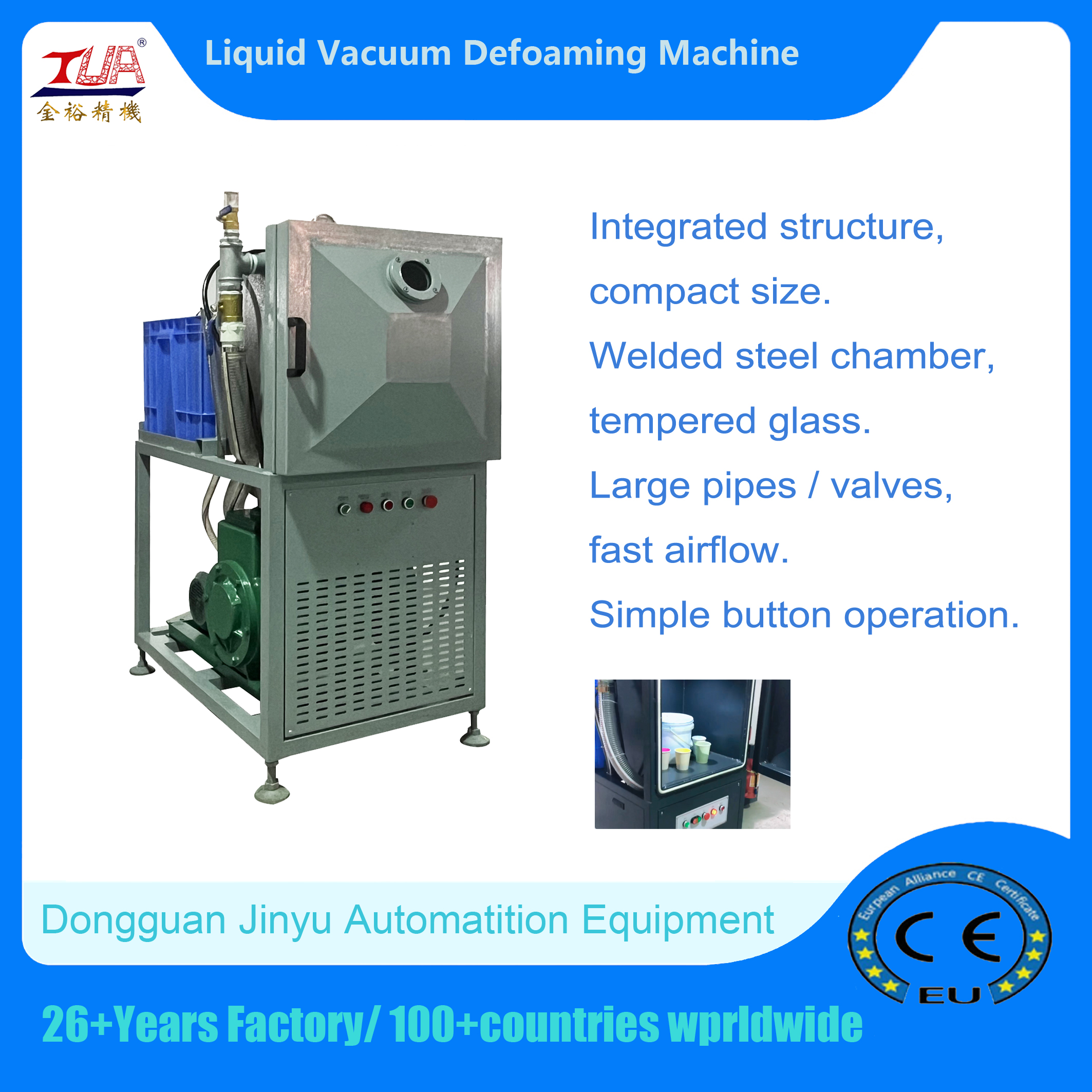
| Name | PVC & Silicone vacuum machine |
| Model | JY-F01-30L-V2 |
| Voltage | 380V |
| Station | 1 |
| Work area | 400*400*400mm |
| Pump type | 30L |
| Pumping speed | 30L/S |
| Ultimate vacuum | 0.06Pa |
| Oilconsumption | 2L |
| Total Power | 3kw |
| Size | 1100*700*1500mm |
| Weight | 350kg |
Core Working Principle
The machine operates on the principle of differential pressure to achieve physical defoaming:
-
Sealing and Evacuation: The container filled with the mixed silicone (e.g., Part A + Part B + color pigment) is placed inside a heavy-duty vacuum chamber. The vacuum pump is then activated to rapidly evacuate the air from the chamber.
-
Bubble Expansion and Rupture: As the chamber pressure approaches a near-absolute vacuum (typically between $-0.098\text{ MPa}$ and $-0.1\text{ MPa}$), the external pressure on the bubbles drops sharply. The bubbles expand rapidly—growing up to several times their original size—and rise to the surface where they rupture and release the trapped air.
-
"Boiling" and Settling: During defoaming, the silicone surface will churn violently, looking much like a boiling liquid, and its volume will rise significantly (a phenomenon known in the industry as "material rising"). Once all the bubbles have ruptured and escaped, the silicone surface naturally subsides and settles, marking the completion of the defoaming process.
Major Equipment Classifications and Selection
Depending on the automation level of the production line and specific process requirements, vacuum defoaming machines are categorized into the following types:
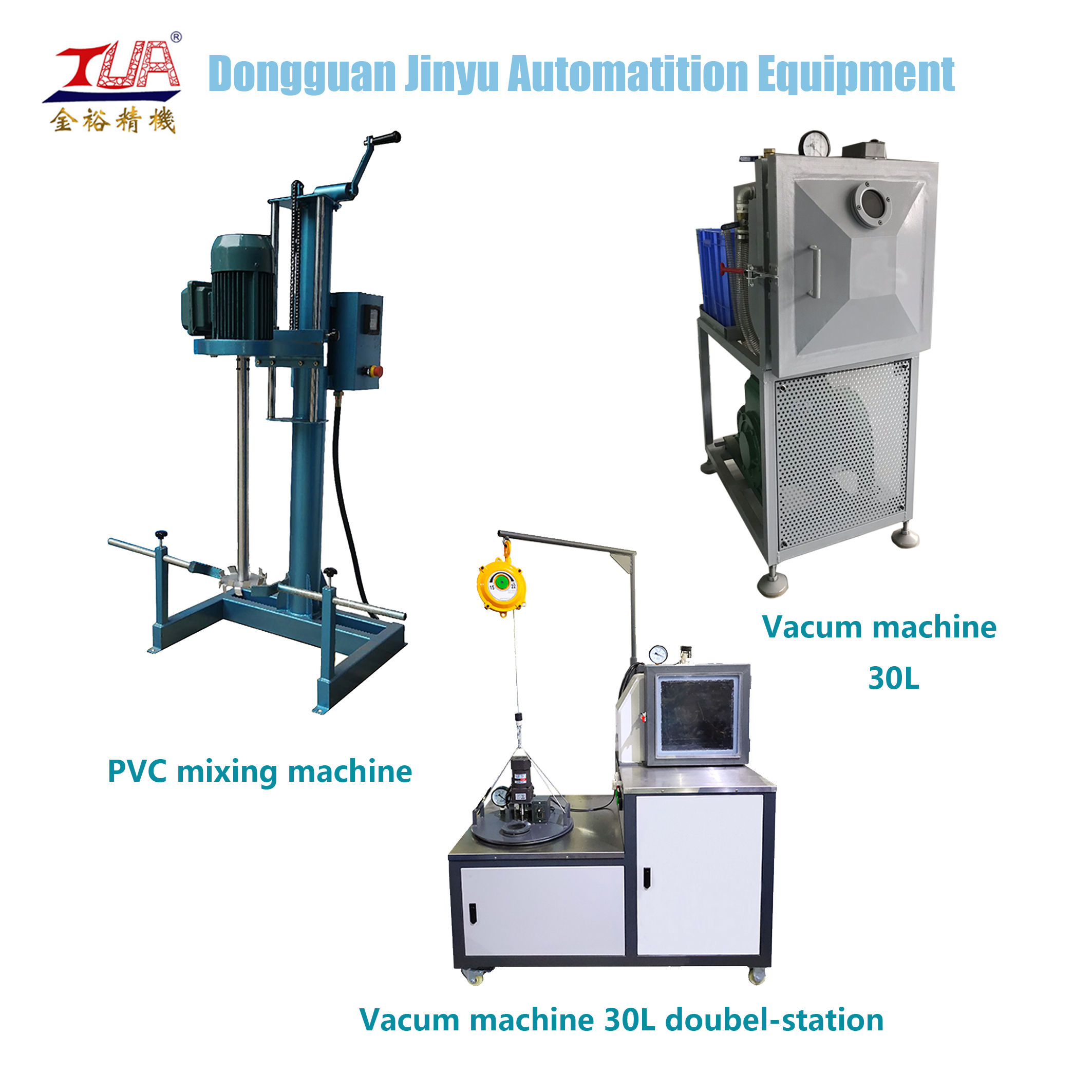
1. Standalone Static Vacuum Defoaming Chambers
This is the traditional model. It features a straightforward design and is ideal for semi-automatic or manual production lines (such as base material preparation before multi-color 3D label dispensing, or manual mold casting).
-
Features: Built with heavy-duty welded steel plates and equipped with a high-transparency tempered glass viewing window. Operators manually place the mixing bucket into the chamber, start the machine, monitor the process, and release the vacuum.
-
Limitations: Lower throughput. For high-viscosity silicone, it requires multiple "evacuation-venting" cycles to prevent the material from overflowing.
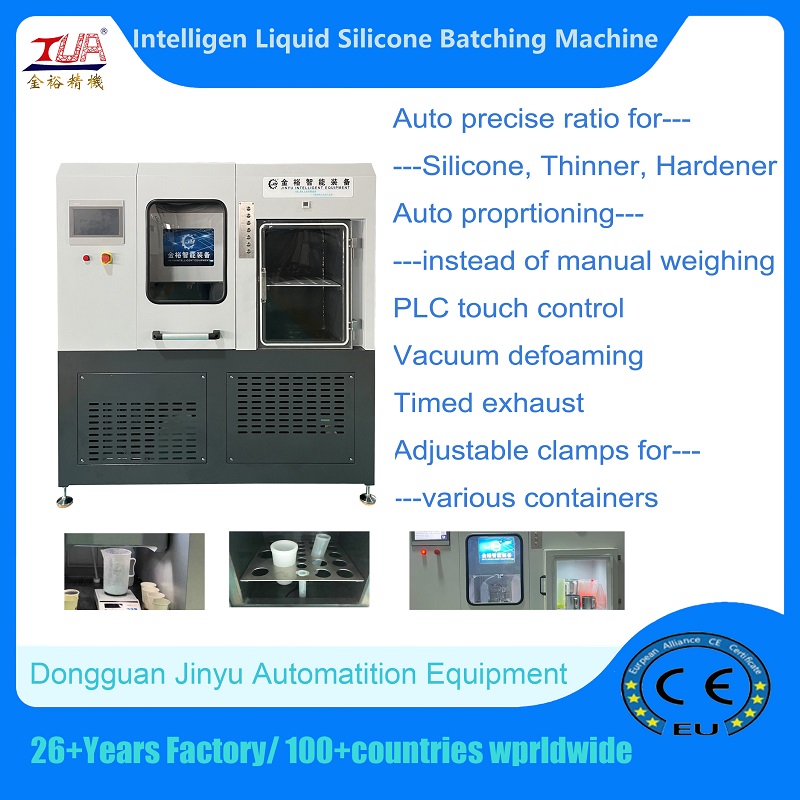
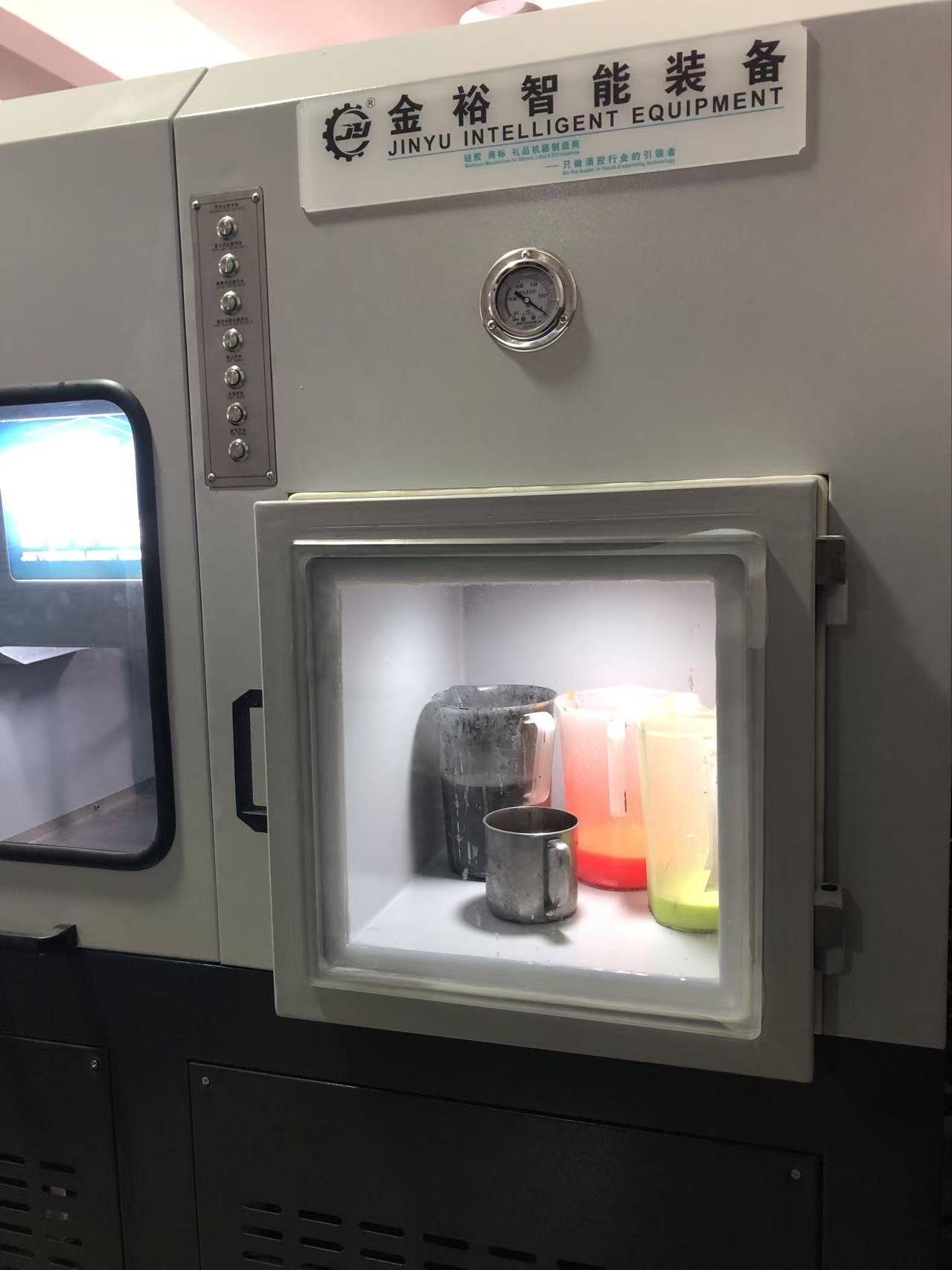
2. Intelligent Integrated Vacuum Mixing and Defoaming Machines (Planetary / Vacuum Mixers)
This machine combines mechanical mixing and vacuum defoaming into a single process. While a high-speed planetary mechanism (simultaneous revolution and rotation) mixes Part A, Part B, and the pigment, a vacuum is drawn inside the chamber concurrently.
-
Advantages: Mixing and defoaming occur simultaneously. Air bubbles are drawn out the instant they are sheared into smaller sizes by the mechanical blades. This increases defoaming efficiency by several times compared to static chambers and ensures highly uniform color blending, making it perfect for high-precision, multi-color dispensing applications (e.g., footwear components, badges, silicone sleeves).
3. Inline Inline/Piping Automatic Defoaming Systems (For Automated Dispensing/Feeding Lines)
Designed for fully automated industrial production lines, this defoaming system is integrated directly into the feeding pipelines.
-
Advantages: Eliminates the need for manual material handling. The silicone flows through a dedicated defoaming unit within sealed pipelines, achieving continuous, bubble-free material delivery. It is mostly used in non-stop production scenarios like automotive seal manufacturing and electronics potting.
Industrial Operation Tips
-
Preventing Overflow: When running a new material for the first time, closely monitor the rising level of the silicone through the viewing window. If the material is about to overflow, manually vent a small amount of air (micro-venting) to collapse the foam, and resume the vacuum once the level drops.
-
Pot Life & Curing Time: For addition-cure liquid silicone rubber that incorporates a catalyst (such as $1:1$ mixtures), the working time at room temperature is limited (typically a few hours). The defoaming process should be completed within 5 to 10 minutes to prevent the silicone from cross-linking inside the machine, which drastically increases viscosity.

Similar Video Recommendation


If you are interested in the product, contact Bossgoovideo.com for more information
- *To:
- Dongguan Jinyu Automation Equipment Co., Ltd.
- *Message:
-
Submit
Main Product:
Dispensing Machines,
PVC Machines,
Silicone Machines ,
Kpu Shoes Machines,
Silicone Label Embossing Machines,
Hydraulic Machines