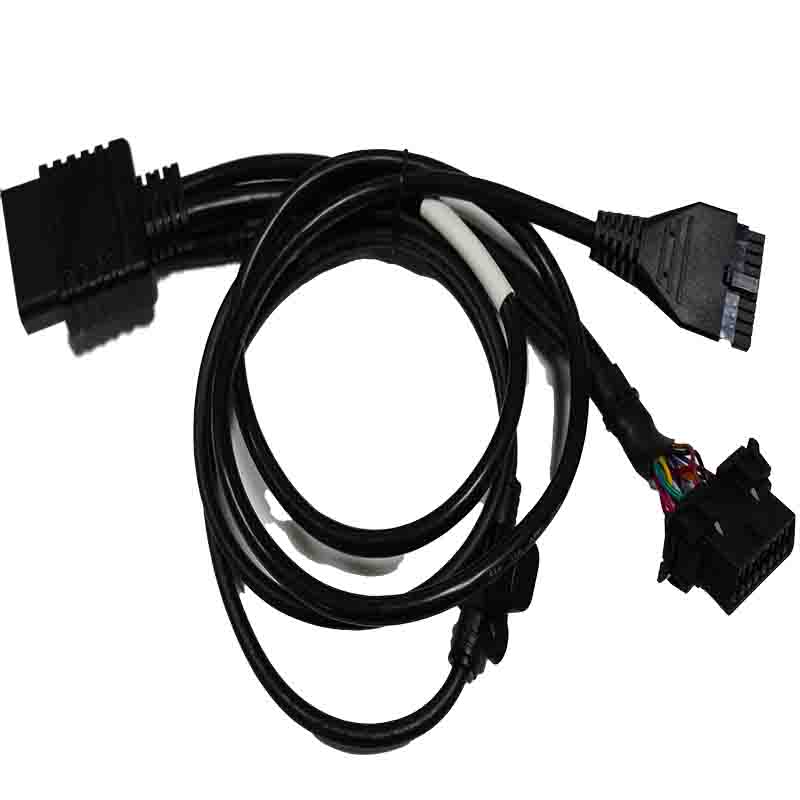
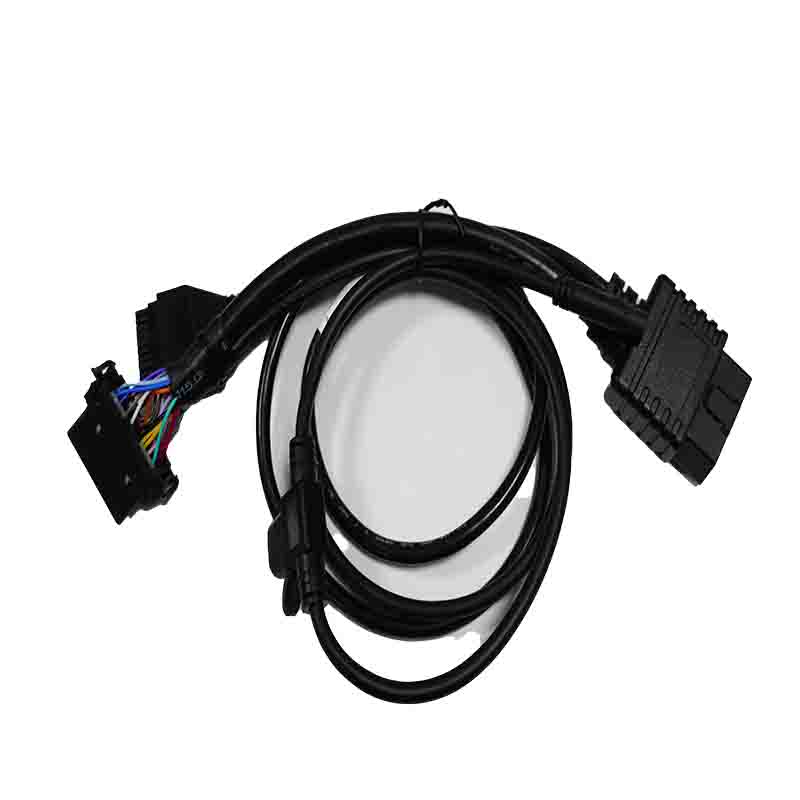
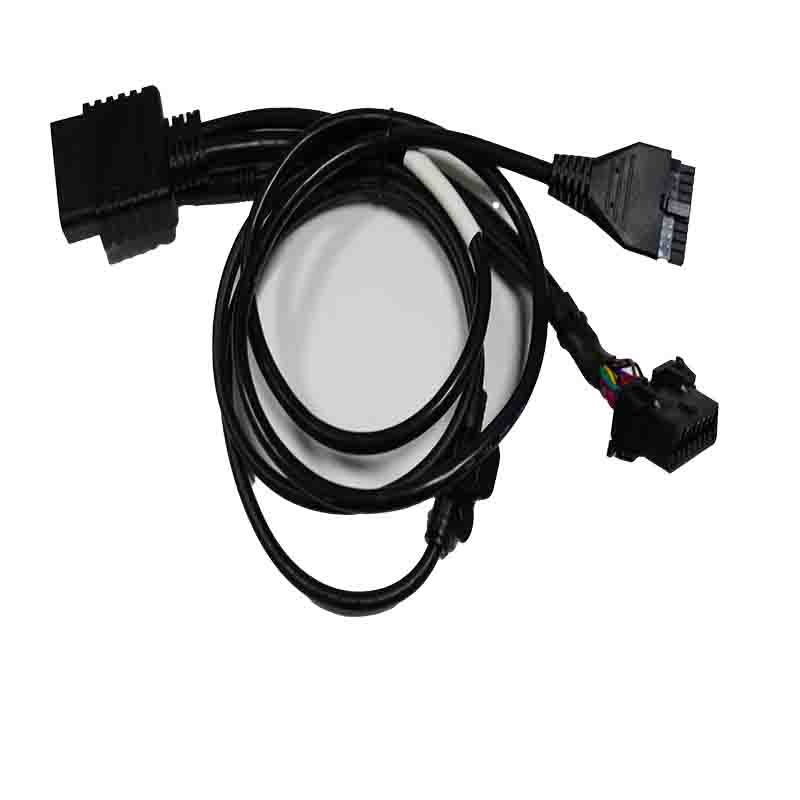
Y-wires linking OBD male (24V) and OBD female (Kia) connectors to Molex 20P and BMW 10P interfaces are critical adapters in automotive diagnostics and customization. These specialized cables bridge distinct connector standards, enabling seamless data transmission and power delivery between OBD systems and vehicle-specific components—essential for mechanics, automotive enthusiasts, and fleet managers alike.
The OBD male connector, rated for 24V, caters to heavy-duty or commercial vehicles where higher voltage systems are standard. Its robust pin configuration ensures stable power supply, preventing voltage drops during diagnostic scans. In contrast, the OBD female connector is tailored for Kia models, matching the brand’s proprietary OBD port layout to ensure a secure fit and reliable communication with the vehicle’s ECU (Engine Control Unit).
The Y-wire design splits the OBD signal and power into two branches: one terminating in a Molex 20P connector, the other in a BMW 10P connector. Molex 20P is widely used in aftermarket electronic modules—such as
GPS trackers or infotainment upgrades—offering a compact, pin-dense solution for data transfer. The BMW 10P connector, meanwhile, aligns with BMW’s specific wiring protocols, making it ideal for integrating OBD data with the brand’s onboard systems, like iDrive or advanced driver-assist features.
Key considerations for using these Y-wires include voltage compatibility and pinout alignment. The 24V OBD male connector must only be used with vehicles supporting 24V systems; connecting it to
12V Kia models (via the female connector) requires a voltage regulator to avoid ECU damage. Pinout mismatches between OBD, Molex, or BMW interfaces can disrupt data flow, so verifying connector pin diagrams—especially for Kia and BMW’s model-specific variations—is mandatory.
In practice, these Y-wires streamline complex tasks. A mechanic might use them to run simultaneous diagnostics: accessing OBD data via the Kia port while connecting a Molex-compatible scanner to monitor auxiliary systems. For BMW owners, the cables allow integrating aftermarket
OBD devices (e.g., performance trackers) without modifying the vehicle’s original wiring. Durability is another asset—quality versions feature insulated wiring and corrosion-resistant connectors, suited for under-hood or dashboard installations.
In summary, these Y-wires solve a common automotive connectivity challenge, merging OBD versatility with Molex and BMW’s specialized standards. By prioritizing compatibility and proper installation, users can leverage their full potential—enhancing diagnostics, enabling customizations, and ensuring reliable performance across different vehicle systems.