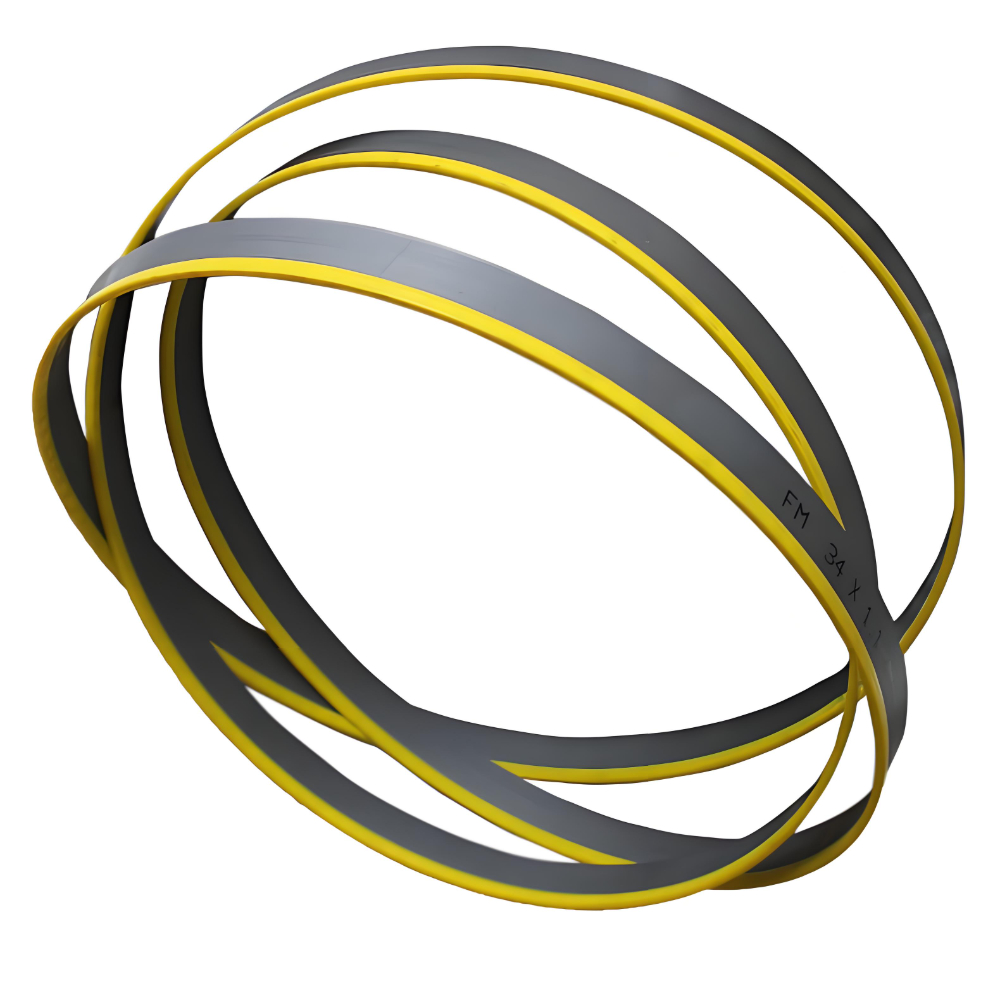
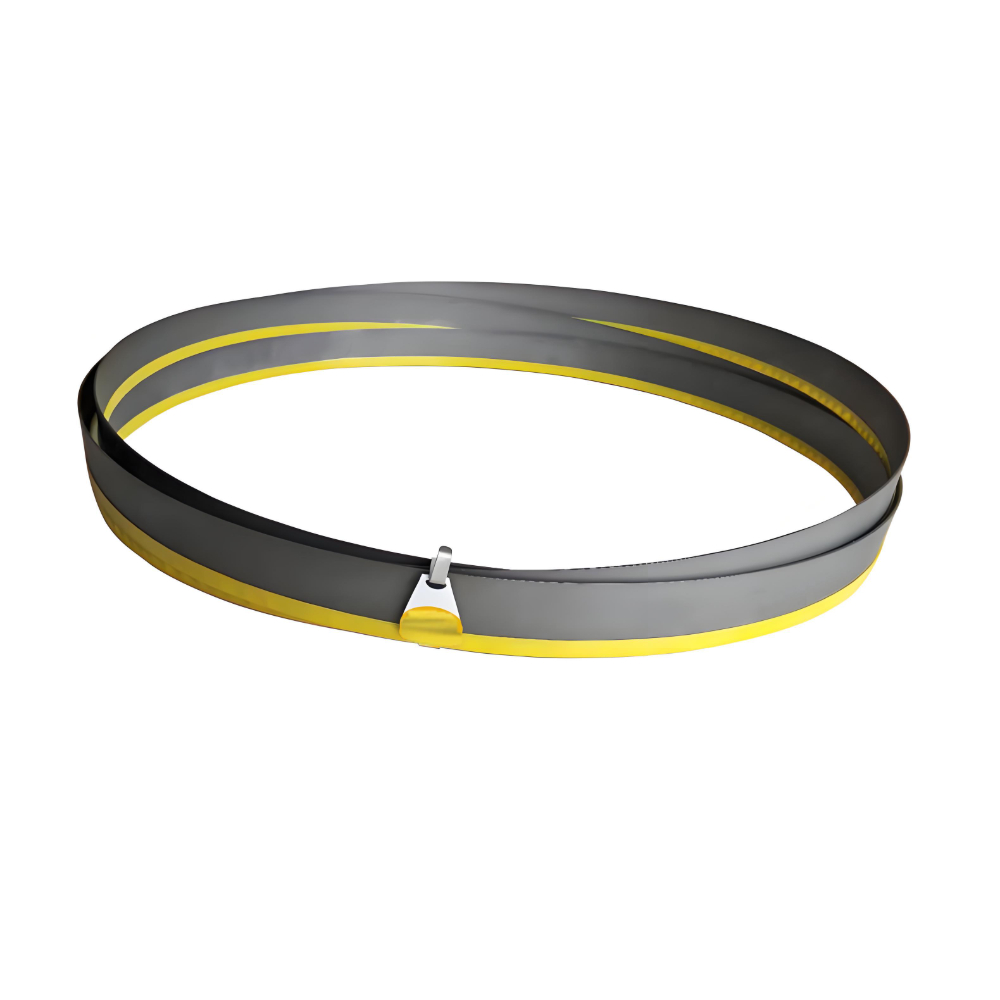
In metal sawing, there are often pain points such as easy saw blade breakage, rapid wear, and poor accuracy. Are you troubled by the frequent need to replace saw blades and low processing efficiency? Our M42 bi-metal band saw blade offers a reliable solution. With its excellent performance, it enables stable and efficient sawing, significantly reducing downtime for part replacement and cutting processing costs.
The teeth of this band saw blade are made of high-quality M42 high-speed steel. After quenching, they form uniformly hardened and rigid tooth tips, which combine high wear resistance and high hardness. At the same time, the back material of the saw blade has special high flexibility, making the saw blade not only resistant to breakage and deviation but also less likely to experience tooth pulling, maintaining a long-lasting and stable sharpness. In actual processing scenarios, it can work in coordination with machining centers, radial drilling machines, and grinding machines. For example, before precise milling is completed on a machining center, it can be used to efficiently saw raw material blanks. When paired with a radial drilling machine for material cutting before hole position processing, and then followed by surface finishing with a grinding machine, it covers the entire metal processing process. It is particularly suitable for sawing hard metal materials such as ordinary steel, die steel, carbon steel, stainless steel, titanium alloy, and aluminum, and can also meet the cutting needs of various soft and hard woods.
It offers a variety of specifications and tooth shapes. Common tooth shapes such as pointed teeth, tensile teeth, and arc-back teeth can be adapted to different processing requirements. Whether it is for mass cutting or fine sawing, it can ensure processing quality and efficiency, providing strong support for the metal processing links in industries such as mining machinery, automotive manufacturing, and hardware processing.
Product Features
The teeth are made of M42 high-speed steel, with high hardness, wear resistance, and a flexible back material, combining durability and anti-breakage ability. Multiple specifications and tooth shapes are available, adaptable to a variety of materials and processing scenarios, with strong versatility.
Tips:
Tips Before using a new saw blade, it needs to be fully run in. The initial feed rate should be controlled at 20 - 30% of the normal rate and gradually increased to the normal level within 2 - 4 hours. When sawing, an adequate amount of cutting fluid should be injected according to the characteristics of the workpiece, which can not only protect the saw blade but also improve cutting accuracy.
We will recommend more suitable tooth shapes based on the actual cutting materials of the customers, thereby better meeting their requirements.