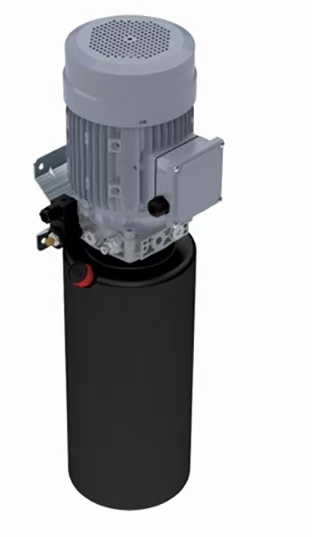
I. Core Functions
1. Hydraulic Power Output: The power unit drives a hydraulic pump via an electric motor, pressurizing hydraulic oil and delivering it to the hydraulic cylinders of the two-post car lift, enabling stable vehicle lifting and lowering.
2. Pressure and Flow Control: Equipped with advanced control valve groups, it can precisely adjust system pressure and flow to accommodate different vehicle models and lifting requirements.
3. Safety Protection Mechanisms: Integrated with safety devices such as overload protection valves and limit switches to prevent equipment damage or safety accidents caused by overloading or improper operation.
II. Technical Parameters
1. Motor Power: Typically around 2.2 kW, adjustable according to the model and load capacity of the car lift.
2. Hydraulic Pump Displacement: Select an appropriate displacement based on the lifting speed and load requirements of the car lift.
3. System Pressure: Generally reaches 16 MPa to 20 MPa to meet the needs of heavy-duty lifting.
4. Power Supply Requirements: Supports 220V single-phase or 380V three-phase power supplies, with a frequency of 50/60 Hz, varying by device model.
III. Structural Components
1. Electric Motor and Hydraulic Pump: Serve as the power source, with the motor driving the hydraulic pump to generate high-pressure hydraulic oil.
2. Control Valve Group: Includes relief valves, directional control valves, throttle valves, etc., used to regulate system pressure and flow, enabling lifting and lowering control of the car lift.
3. Oil Tank and Filter: Store hydraulic oil and filter out impurities, ensuring clean and stable system operation.
4. Piping and Connectors: Connect various components and transmit high-pressure hydraulic oil.
5. Safety Devices: Such as overload protection valves and limit switches, ensuring operational safety.
IV. Application Scenarios
1. Automotive Repair and Maintenance: Used in auto repair shops, 4S dealerships, and other settings for vehicle lifting and inspection tasks, such as tire replacement and chassis inspection.
2. Multi-story Car Parks: Acts as the power source for multi-story parking equipment, enabling vertical lifting and horizontal movement of vehicles to improve space utilization.
3. Industrial Production: In industrial scenarios requiring vertical transportation, such as material lifting on production lines.
V. Advantages and Features
1. Stable and Reliable: Utilizes mature hydraulic technology, providing smooth power output and reliable lifting processes.
2. Safe and Efficient: Equipped with multiple safety protection devices to ensure operational safety; an efficient hydraulic system shortens lifting times and improves work efficiency.
3. Modular Design: Facilitates customization and expansion, allowing integration with PLC controllers, distributed control systems, etc., for automated control based on different needs.
4. Easy Maintenance: Features a compact structure and highly standardized components, facilitating routine maintenance and troubleshooting.