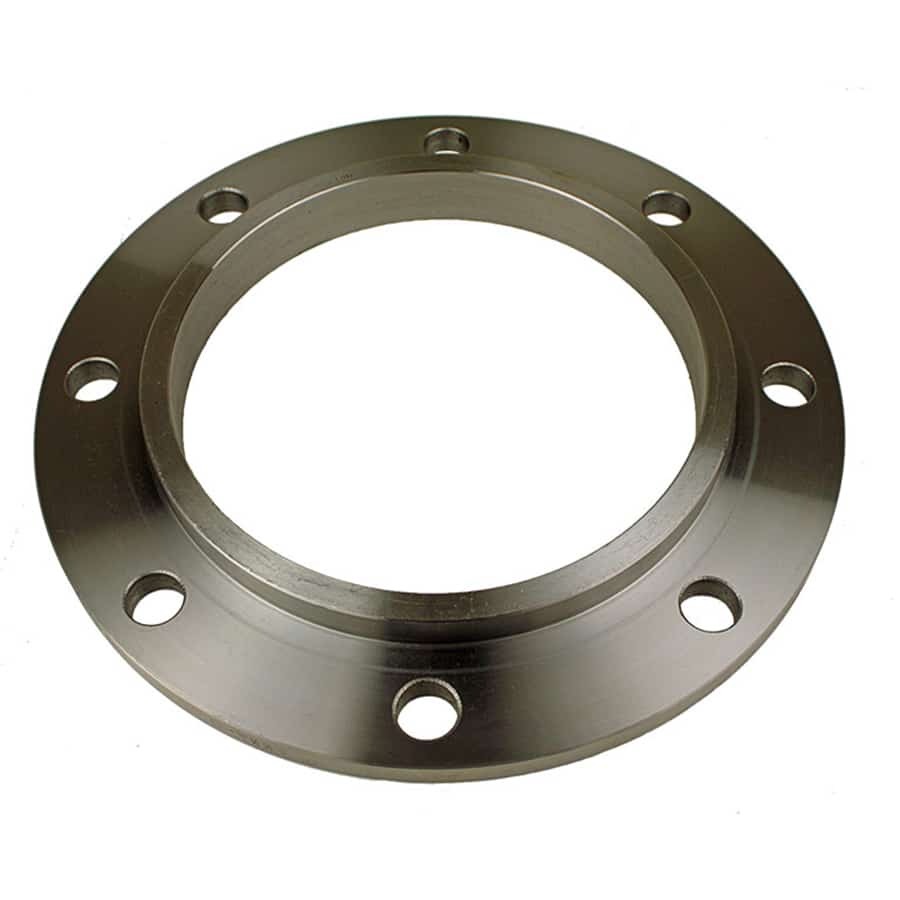
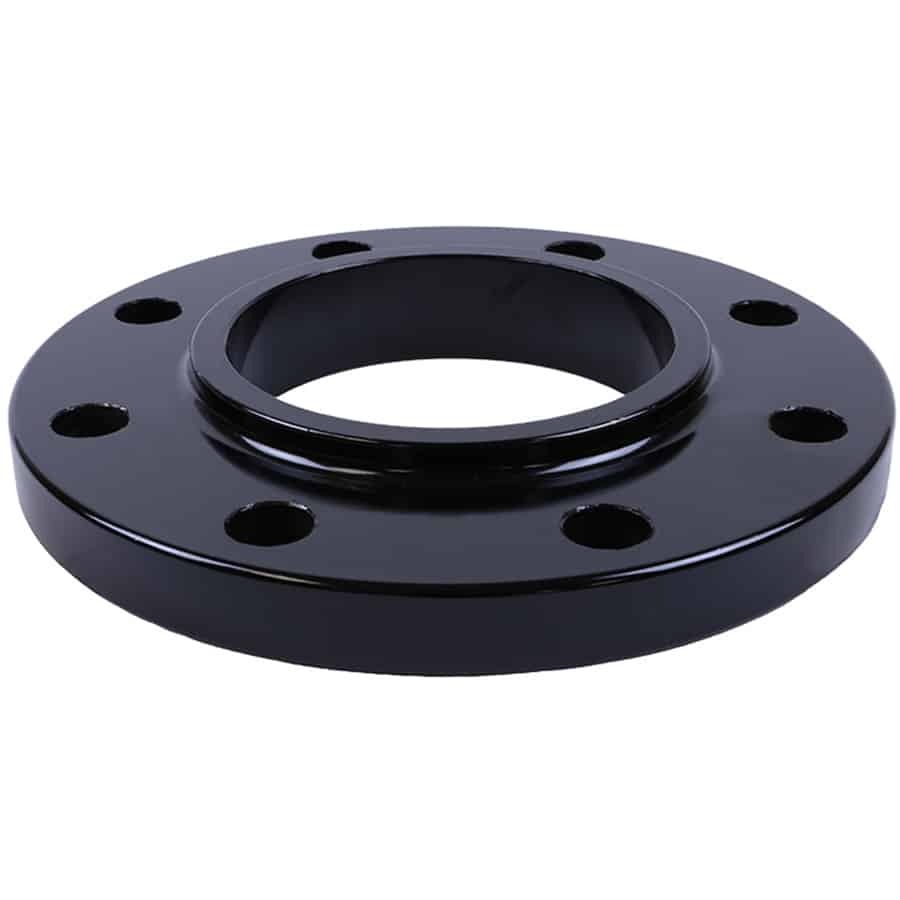
Carbon steel flanges are produced from a variety of steel options containing anywhere from 0.05% to 2.1% carbon, which directly affects the strength, hardness, ductility, and weldability. The chemical composition of carbon steel (with the absense of chromium, nickel, molybdenum, and other elements) makes it both cost-effective and versatile.
One of the advantages of carbon steel is that it can be easily machined, welded, and heat treated, which allows manufacturers to tailor flanges for a wide range of applications. As the carbon content increases, the steel can be made stronger and harder, though this also reduces ductility and weldability. Grades like ASTM A36 (mild/low carbon steel plate flange) and A105 (medium carbon, forged flanges) are most common in industrial piping systems.
1. Material Specification Standards
ASTM A105 – The most common grade used for forged carbon steel flanges in ambient and high-temperature pressure systems.
ASTM A36 / Q235 – Designed for low-temperature applications with enhanced toughness.
ASTM A694 (F42–F70) – A stronger-grade material commonly used in high-pressure oil and gas systems.
2. Dimensional & Pressure Standards (ANSI/ASME B16 Series)
ANSI/ASME B16.5 – Applies to pipe flanges from ½″ to 24″, offering pressure classes 150, 300, 400, 600, 900, 1500, and 2500. The standard defines flange dimensions, pressure-temperature ratings, and tolerance limits, and includes materials like ASTM A105.
ANSI/ASME B16.47 – Covers larger weld-neck and blind flanges (26″ to 60″), divided into Series A and B, with pressure classes 75, 150, 300, 400, 600, and 900.
AWWA C207 – Covers carbon steel flanges used in waterworks and other applications up to 300 psi.
DIN EN 1092-1 – Carbon steel DIN flanges can have various pressure ratings, e.g., PN10, PN16, PN25.
Applications of CS Flanges
Oil and Gas Pipelines
Carbon steel flanges provide secure, leak-proof connections in high-pressure liquid transport systems, which makes them essential for petroleum and natural gas infrastructure.
Power Generation Plants
Used in steam lines, heat exchangers, and other high-temperature systems.
Chemical Processing
Resistant to harsh operating conditions, carbon steel flanges are well-suited for handling various chemicals and process fluids.
Construction and Infrastructure
Commonly applied in pipeline systems for large-scale projects such as buildings, roadways, and manufacturing facilities.
Water Treatment Facilities
Large-diameter pipelines in treatment plants rely on carbon steel flanges for long-lasting performance and efficient fluid control under demanding conditions.