
Composite Silicone Rubber Insulator
3 month ago
Composite Synthetic Suspension Insulator | IEC 61109 Line Hardware | Composite Silicone Insulator
Advanced Silicone Rubber & ECR Core Technology: Built around a high-strength, boron-free ECR fiberglass epoxy resin core rod, our insulators deliver maximum tensile load resistance. The core is permanently bonded to a high-grade HTV (High Temperature Vulcanized) Silicone Rubber housing and sheds. Silicone rubber provides outstanding hydrophobic properties, allowing water droplets to bead up and prevent leakage currents in heavy industrial or coastal salt-spray environments.
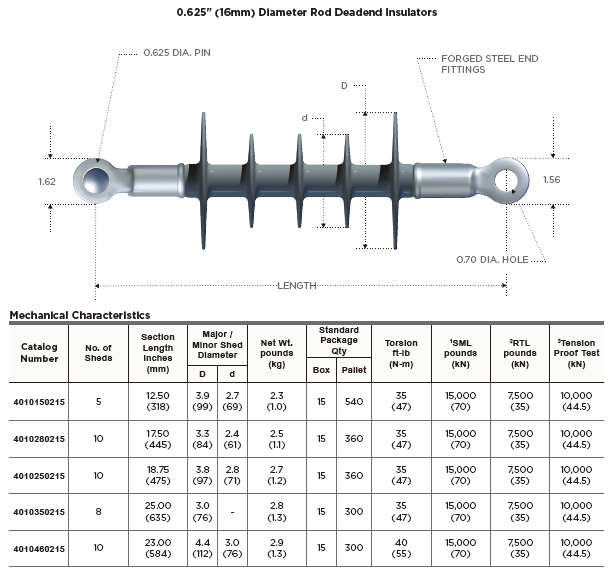
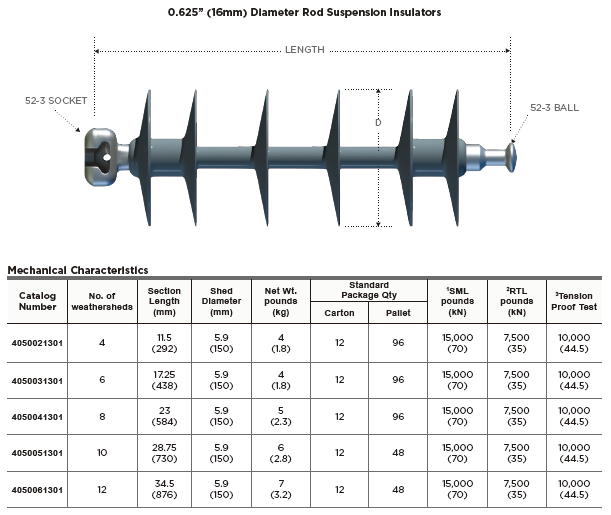
Drop-Forged End Fittings & Hydraulic Crimping: Available with Ball & Socket, Tongue & Clevis, or Y-Clevis end fittings, which are integrally drop-forged from high-yield steel and Hot Dip Galvanized to ASTM A153. The interface between the metal fitting and the fiberglass core is secured using advanced computerized hydraulic crimping, ensuring an airtight, moisture-proof seal that exceeds IEC 61109 mechanical standards.

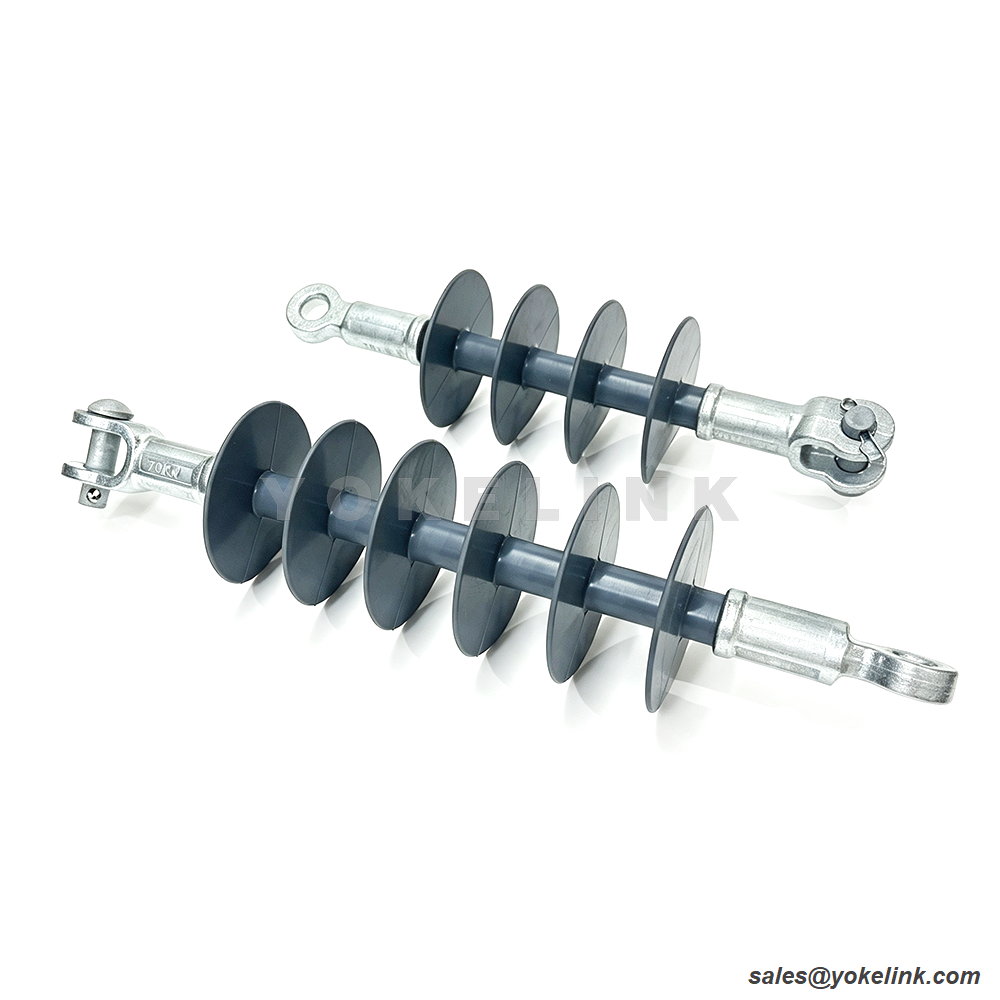
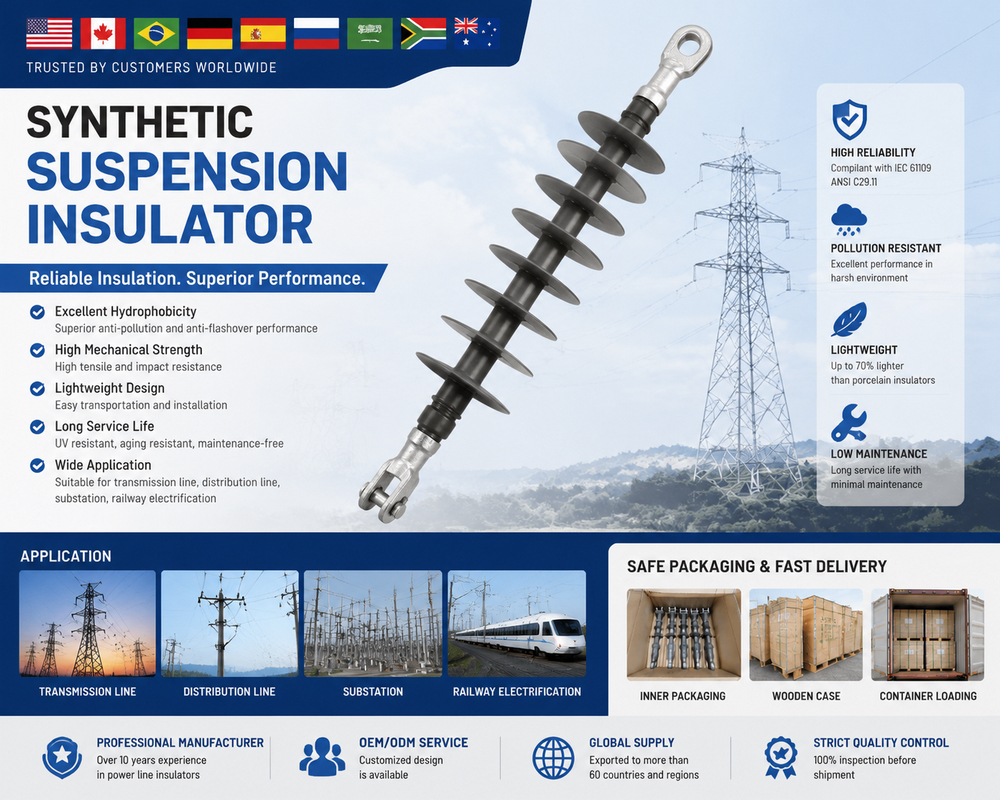
Key Technical Features of Synthetic Suspension Insulator
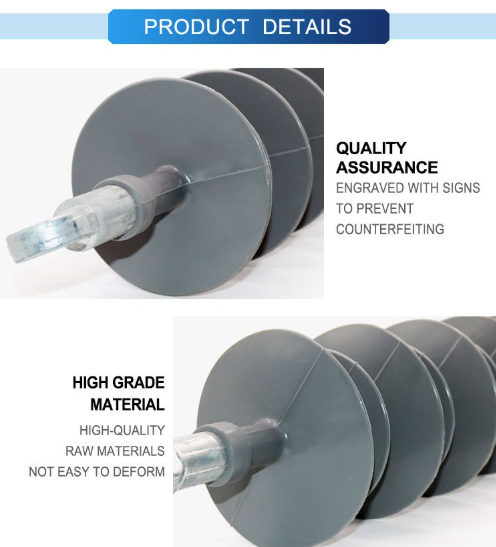
International Compliance: Manufactured and tested strictly per IEC 61109 and ANSI C29.13 standards.
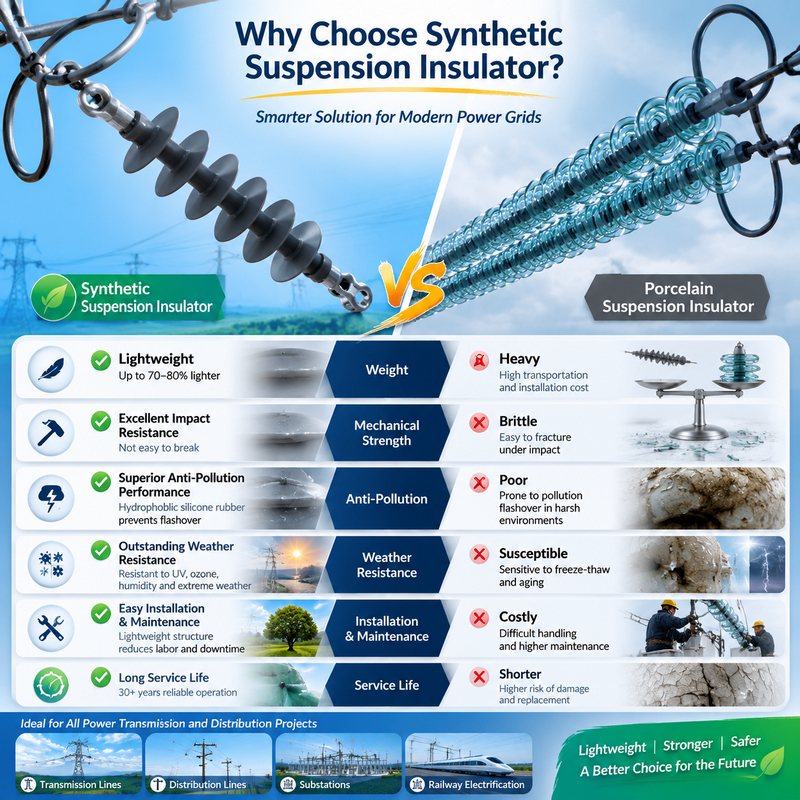
Lightweight Design: Up to 80% lighter than porcelain equivalents, drastically reducing tower installation loads.
Superior Hydrophobicity: Silicone rubber housing sheds moisture and prevents pollution flashovers.
Secure End Fittings: Drop-forged steel fittings with heavy Hot Dip Galvanization (HDG).
Shatterproof Safety: High impact resistance eliminates vandalism and transit breakage risks.
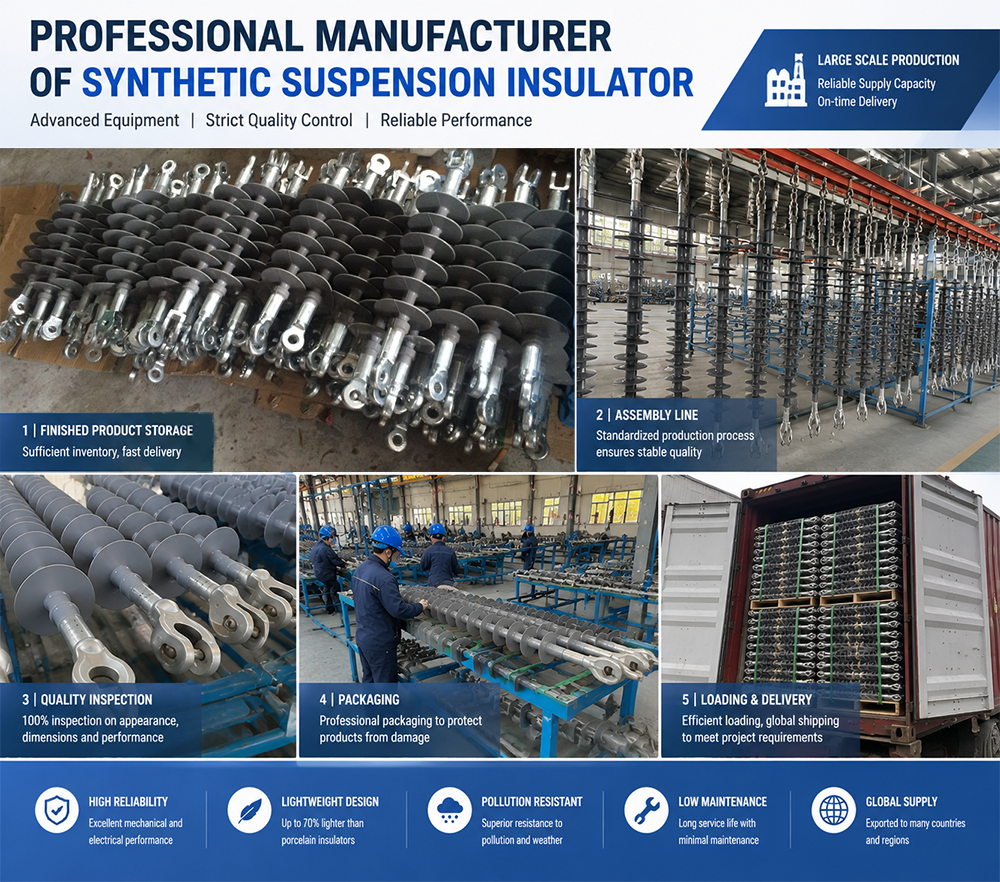
Production Process of Synthetic Suspension Insulator
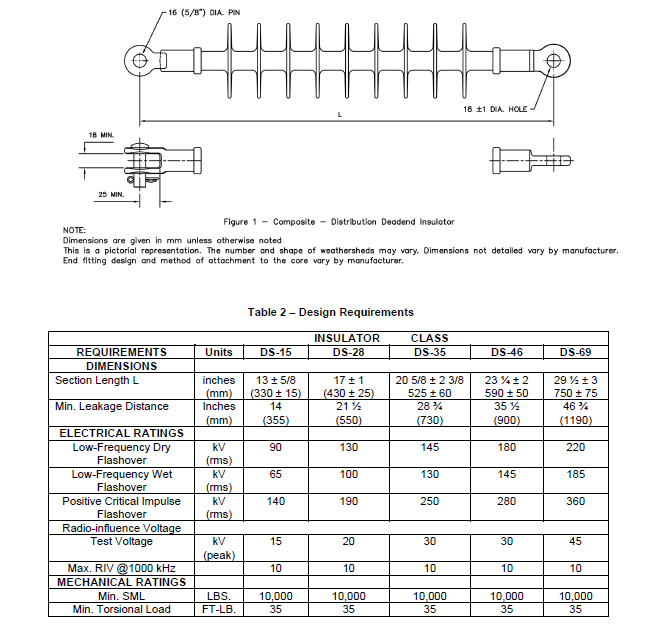
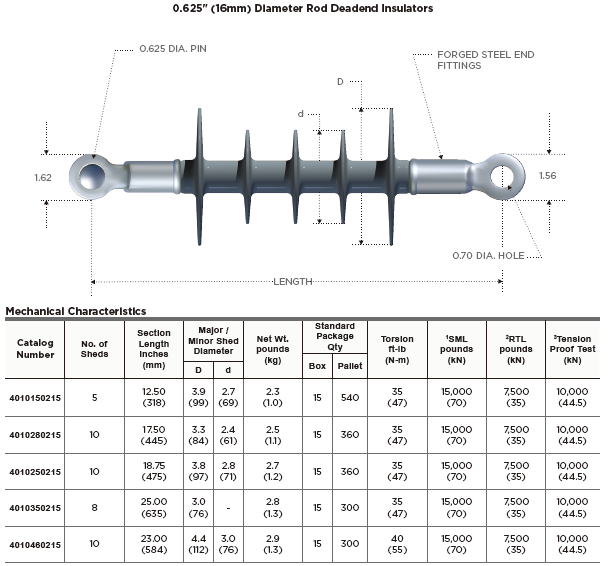
Technical Parameters of Synthetic Suspension Insulator
| Item | Specification |
| Rated Voltage | 11kV-500kV |
| Rated Mechanical Load | 70kN-300kN |
| Housing Material | Silicone Rubber |
| Core Material | FRP Rod |
| End Fitting | Ball / Clevis / Eye Type |
| Standard | IEC 61109 |
| Creepage Distance | Customized |
| Color | Gray / Customized |
Advantages Over Porcelain Insulators
| Item | Synthetic Suspension Insulator | Porcelain Insulator |
| Weight | Much lighter | Heavier |
| Impact resistance | Excellent | Prone to breakage |
| Pollution flashover performance | Excellent | Average |
| Installation cost | Low | Higher |
| Vibration resistance | Good | Poor |
| Transportation | Convenient | Easily damaged |
Yokelink Product Quality Inspection Report


Application of Synthetic Suspension Insulator
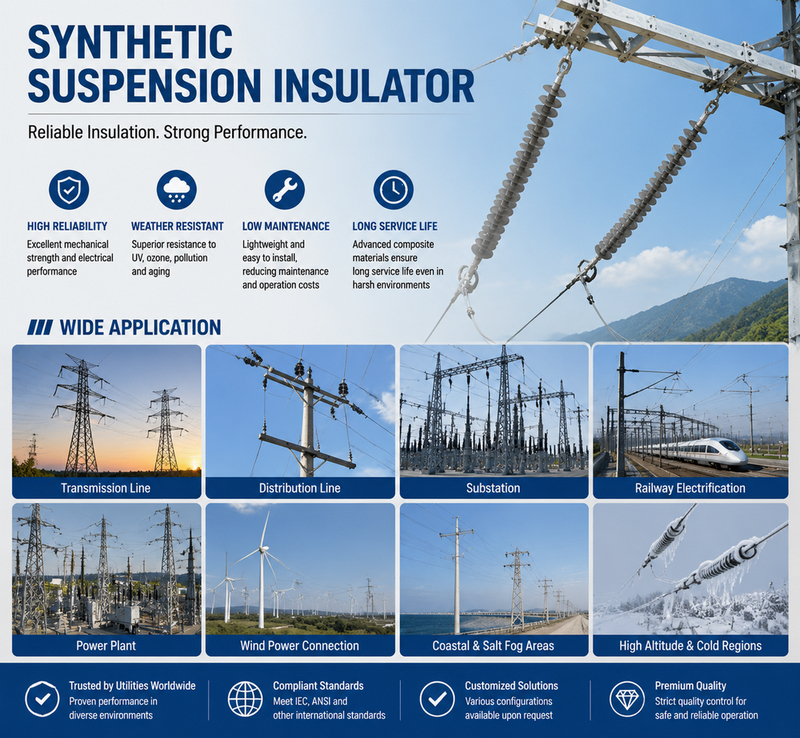
Routine Tests of Synthetic Suspension Insulator

Frequently Asked Questions (FAQ)
Q1: What are the primary advantages of composite synthetic insulators over traditional porcelain?
A: Composite insulators offer three massive advantages: 1) Lightweight construction (weighing up to 80% less than porcelain, making manual or helicopter stringing vastly safer and cheaper); 2) Superior pollution performance (silicon rubber repels water and prevents leakage current in heavy salt-spray or industrial smog); and 3) Shatterproof durability (they withstand high mechanical impacts without catastrophic brittle shattering).
Q2: What is the significance of the "HTV Silicone Rubber" housing?
A: HTV (High Temperature Vulcanized) silicone rubber possesses unique hydrophobic properties. When exposed to moisture, water forms isolated beads rather than a continuous conductive film, preventing dry-band arcing and flashover. Furthermore, silicone rubber has a "hydrophobic transfer" capability, meaning airborne dust particles become encapsulated by the silicone matrix, maintaining long-term self-cleaning performance.
Q3: How is the mechanical strength of a synthetic suspension insulator tested?
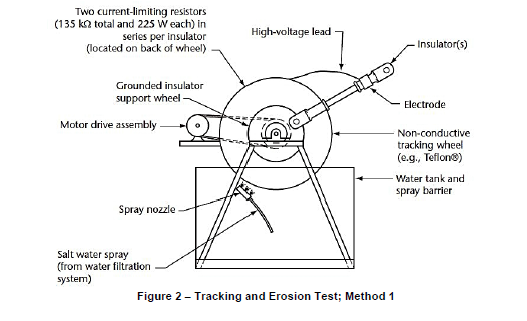
A: Compliance with IEC 61109 requires rigorous mechanical and electrical type tests. This includes the Specified Mechanical Load (SML) test, where the insulator is subjected to 100% of its rated tensile load for a specified duration, followed by a routine 100% proof test on every single production unit to guarantee zero structural yielding or core pull-out.
Q4: Can these suspension insulators be used in both suspension and deadend configurations?
A: Yes. Depending on the end fittings selected, they serve both roles. Ball & Socket fittings are typically used for flexible vertical suspension strings on intermediate poles. Tongue & Clevis (or Y-Clevis) fittings provide rigid, high-capacity pin connections, making them ideal for heavy deadend, angle, or terminal tension towers.
Q5: What standard governs the corrosion resistance of the metal end fittings?
A: All carbon steel end fittings—such as the ball, socket, tongue, and clevis components—are forged from high-yield steel and fully Hot Dip Galvanized in strict compliance with ASTM A153. This ensures a heavy, metallurgically bonded zinc layer that protects the steel from atmospheric corrosion for a minimum 30-year operational life span.
Q6: How does Yokelink prevent "Brittle Fracture" in composite suspension insulators?
A: Brittle fracture occurs when stress corrosion cracks propagate through the internal fiberglass rod under tension and acidic moisture. Yokelink completely eliminates this failure mode by utilizing ECR (Extra Corrosion Resistant) boron-free fiberglass rods. Our ECR core rods are specifically engineered to withstand severe acid degradation, ensuring maximum structural mechanical stability even if moisture ever breaches the outer seals under extreme weather.
Q7: What sealing method is used at the junction between the metal fitting and the silicone housing?
A: The metal-to-silicon interface is the most critical moisture-barrier point. Yokelink uses a multi-layered sealing system: 1) High-pressure high-temperature vulcanization directly over the core; 2) Computer-controlled precision hydraulic crimping that compresses the metal fitting evenly without micro-cracking the rod; and 3) An injection of high-grade, permanent RTV/HTV silicone sealant at the fitting lip. This triple-seal technology prevents any moisture ingress that could cause internal tracking or flashover.
Value-Added Supply Chain Services

Yokelink offers Blanket Order programs: Place an annual order to lock prices, we manufacture your total volume and hold stock in our facility free of charge. Split Shipments: Schedule partial shipments (e.g., monthly or quarterly) based on your project progress. You get the benefits of just-in-time delivery without the risk of shortages.
2. DDP Shipping (USA Duties Included)Landed Cost Certainty:
3. Free Sample Program
Similar Video Recommendation


If you are interested in the product, contact Bossgoovideo.com for more information
- *To:
- Ningbo Yokelink Machinery Co.,Limited
- *Message:
-
Submit
Main Product:
Poleline Hardware,
Insulator fitting,
Thimble eye,
Anchor rod,
Sturctral Bolt,
Fastener