
Transglutaminase
2 month ago
Microbial Transglutaminase for Meat and Protein Processing
Overview
Transglutaminase is a protein-modifying enzyme used in food processing to catalyze cross-linking reactions between suitable protein molecules. It is commonly referred to as TG enzyme and is applied where controlled modification of protein structure is required during formulation and manufacturing.
Commercial Transglutaminase is mainly supplied as an enzyme powder, with a smaller range of liquid preparations available. Powder products typically appear off-white to pale yellow, while liquid preparations may range from pale yellow to light brown.
Typical application areas include restructured meat products, surimi products, soy-based foods, dairy products, flour-based foods, and plant-based formulations. Product selection is generally based on enzyme activity, formulation requirements, and applicable food-processing specifications.
Technical Specifications
| Item | Specification |
|---|---|
| Product Name | Transglutaminase |
| Common Name | TG Enzyme |
| Product Category | Protein-modifying enzyme |
| Product Form | Powder; selected liquid grades |
| Powder Appearance | Off-white to pale yellow powder |
| Liquid Appearance | Pale yellow to light brown liquid |
| Active Component | Transglutaminase enzyme |
| Main Function | Enzymatic protein cross-linking |
| Standardization | Enzyme activity |
| Applications | Meat products, surimi, soy foods, dairy, flour-based foods, plant-based foods |
| Quality Testing | Enzyme activity, microbiological quality, heavy metals |
| Reference Standard | GB 1886.174-2016 |
| Documentation | COA available |
Functional and Formulation Characteristics
Transglutaminase modifies suitable proteins by catalyzing the formation of covalent cross-links between specific amino acid residues. This enzymatic process can alter the structural properties of protein networks without requiring the addition of another structural protein.
Key formulation characteristics include:
- Suitable for protein-rich formulation systems.
- Supports controlled protein cross-linking.
- Primarily available as a powder preparation.
- Applicable to animal- and plant-derived proteins.
- Can be incorporated during selected food-processing stages.
- Standardized according to measured enzyme activity.
Performance varies with protein source, substrate concentration, enzyme dosage, temperature, pH, treatment time, and other formulation components. These factors should be evaluated during product development because different protein matrices can respond differently to enzymatic cross-linking.
Application Context
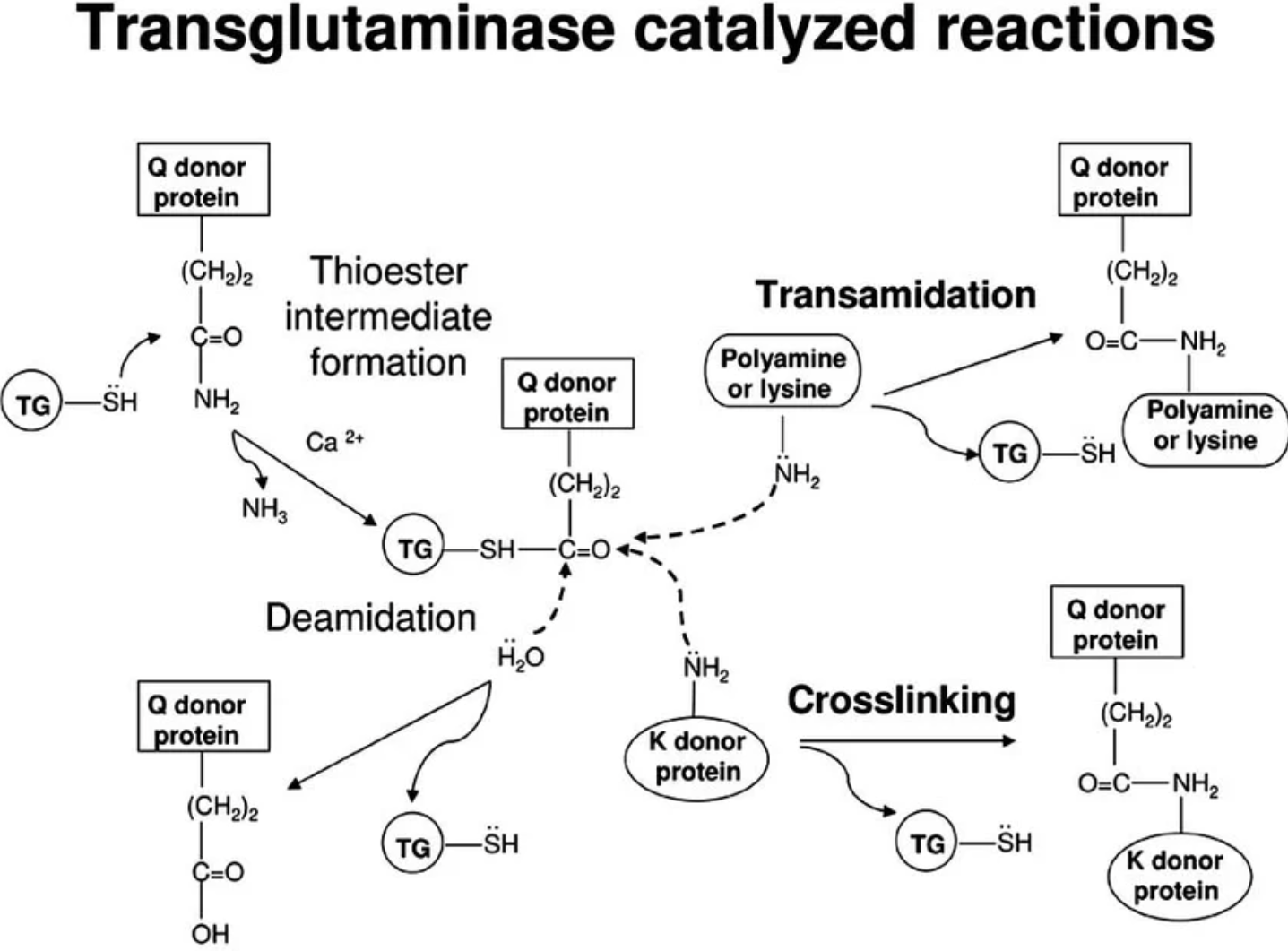
In restructured meat formulations, Transglutaminase can be incorporated into suitable protein systems during controlled processing stages. Processing parameters should be established according to the meat substrate and intended product structure.
For surimi and other processed aquatic foods, TG enzyme can be evaluated for modification of protein networks during formulation and processing.
In soy products and plant-based foods, Transglutaminase may be used with suitable plant proteins where enzymatic protein cross-linking is part of the manufacturing design. Performance should be evaluated individually for different protein sources.
Dairy formulations represent another application area where selected Transglutaminase grades can be used for protein modification. It may also be applied in flour-based and other protein-containing food systems according to specific processing requirements.
For all food applications, the selected grade, dosage, manufacturing conditions, and regulatory suitability should be confirmed for the intended product category.
Composition and Standardization
The principal functional component is active Transglutaminase enzyme. Commercial preparations may contain suitable food-grade carriers or formulation components depending on the product design.
Routine quality-control parameters include:
- Transglutaminase enzyme activity.
- Physical appearance.
- Microbiological quality.
- Heavy metal testing.
- Batch consistency.
Enzyme activity is the primary parameter for commercial standardization. When comparing TG enzyme grades, buyers should review the declared activity together with the assay method and activity-unit definition.
Quality evaluation may reference GB 1886.174-2016 where applicable. A batch-specific COA can provide relevant analytical results. Powder preparations should be kept sealed under cool, dry conditions and protected from moisture, direct sunlight, and excessive heat.
Similar Video Recommendation

If you are interested in the product, contact Bossgoovideo.com for more information
- *To:
- Xi'an Gubond Biotechnology Co., Ltd.
- *Message:
-
Submit
Main Product:
Raw health products,
Food Additives,
Cosmetic Raw Materials,
Enzyme Supplements ,
Protein Powder,
Health supplements