High-Purity Alumina Ceramic Insulators: Precision Engineering for Extreme Environments
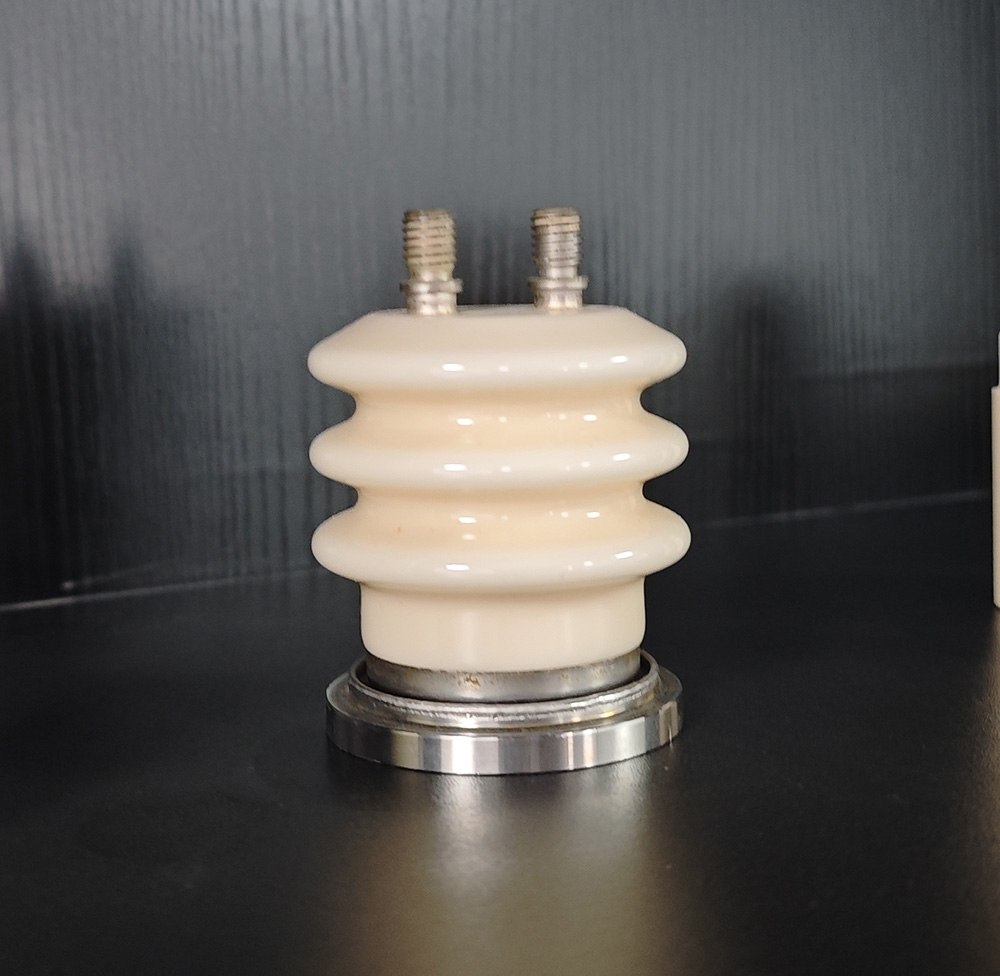
In the realm of advanced materials science and industrial manufacturing, the demand for reliable electrical isolation under harsh conditions has never been greater. Our premium range of Alumina Ceramic insulator products represents the pinnacle of material engineering, designed to meet the rigorous standards of global industries ranging from semiconductor fabrication to high-voltage power transmission. By leveraging 96% to 99.6% pure aluminum oxide (Al2O3), these components offer an unparalleled combination of dielectric strength, thermal conductivity, and mechanical robustness. Whether you require standard off-the-shelf solutions or a bespoke custom Alumina Ceramic insulator tailored to specific geometric constraints, our manufacturing capabilities ensure consistent quality and performance that stands the test of time.
Key Characteristics and Technical Superiority
The fundamental advantage of utilizing alumina ceramic in critical applications lies in its exceptional physical and chemical properties. These materials exhibit high electrical resistivity, ensuring minimal leakage current even at elevated voltages. The dielectric constant remains stable across a wide frequency range, making it ideal for radio frequency and microwave applications. Furthermore, the thermal shock resistance allows these components to withstand rapid temperature changes without cracking, a crucial feature for heating elements and furnace linings. The hardness of sintered alumina ceramic approaches that of diamond, providing superior wear resistance against abrasive environments. Additionally, the chemical inertness of this material ensures it does not react with most acids, alkalis, or organic solvents, guaranteeing long-term stability in corrosive atmospheres. When compared to other ceramics such as zirconia or beryllia, alumina offers the best balance of cost-effectiveness and performance for general-purpose high-temperature insulation.
Detailed Product Description and Manufacturing Excellence
Our production process begins with the selection of ultra-pure alpha-alumina powder, which is carefully processed to ensure uniform particle size distribution. Through advanced pressing techniques, including isostatic pressing and injection molding, we achieve dense green bodies that are subsequently sintered at temperatures exceeding 1700 degrees Celsius. This high-temperature sintering process eliminates porosity, resulting in a microstructure that maximizes both mechanical strength and dielectric integrity. For those seeking a ceramic tube Alumina insulator, our precision machining capabilities allow for tight tolerances on inner and outer diameters, ensuring perfect fitment in sensitive assemblies. Surface finishes can be polished to mirror-like smoothness or left with a controlled roughness depending on the application requirements. Each batch undergoes rigorous testing, including breakdown voltage measurement, volume resistivity checks, and dimensional inspection using coordinate measuring machines. This commitment to quality control means that every custom Alumina Ceramic insulator delivered meets international standards such as ASTM and IEC specifications. The versatility of our product line includes flat discs, bushings, substrates, tubes, and complex multi-cavity structures, all crafted with the same dedication to excellence.
Global Application Scenarios and Industry Solutions
The utility of high-grade alumina extends across a vast spectrum of sectors. In the electronics industry, these insulators serve as substrates for integrated circuits and power modules, where efficient heat dissipation is vital for preventing overheating. In the automotive sector, particularly with the rise of electric vehicles, alumina components are used in spark plug insulators and sensor housings due to their ability to handle high thermal loads. Aerospace engineers rely on these materials for insulating components in jet engines and satellite systems, where weight savings and reliability are paramount. Medical device manufacturers utilize biocompatible alumina variants for surgical instruments and implantable device housings. Furthermore, in the field of lighting, high-pressure sodium and metal halide lamps employ alumina ceramic arc tubes to contain the plasma arc while withstanding extreme internal pressures and temperatures. Solar panel inverters also benefit from the use of custom Alumina Ceramic insulator units to manage high DC voltages safely. From laboratory crucibles to industrial kiln furniture, the adaptability of this material makes it indispensable for modern technological advancement.The performance is superior to that of Alumina Ceramic & High Purity Alumina Ceramic.
Performance is not lower than that of Zirconia ceramic & Aluminium Nitride ceramic.
AlUMINA TECH DATA
|
ITEM
|
UNIT
|
99.9 ALUMINA
|
|
Density
|
G/cm3
|
3.94
|
|
Bending Resistance
|
Mpa
|
500
|
|
Compressive Strength
|
Mpa
|
3300
|
|
Elasticity Modulus
|
Gpa
|
400
|
|
Shock Strength
|
Mpam/2
|
5.2
|
|
Vaporization Coefficient
|
M
|
12
|
|
Vickers Hardness
|
HV0.5
|
2000
|
|
Thermal Expansivity
|
10-6K-1
|
8.0
|
|
Conductivity
|
W/MK
|
28
|
|
Thermal Shock Resistance
|
AT℃
|
280
|
|
Maximum Service Temperature
|
℃
|
1750
|
|
20℃ Volume Resistance
|
Ω
|
≥1015
|
|
Dielectric Strength
|
KV/mm
|
30
|
|
Apparent Porosity
|
%
|
0
|
|
Permittivity
|
Er
|
10
|
|
Dielectric Loss Angle
|
tanδ
|
0.001
|
ALUMINA POWDER TECH DATA
|
ITEM
|
LS-110
|
LS-120
|
LS-130
|
LS-110F
|
LS-220
|
LS-210
|
|
LOI(%)
|
0.02
|
0.02
|
0.05
|
0.08
|
0.03
|
0.01
|
|
Na2O(%)
|
0.05
|
0.04
|
0.03
|
0.05
|
0.07
|
0.08
|
|
SiO2(%)
|
0.07
|
0.07
|
0.07
|
0.09
|
0.02
|
0.02
|
|
Fe2O3(%)
|
0.03
|
0.03
|
0.03
|
0.03
|
0.02
|
0.02
|
|
Al2O3(%)
|
99.9
|
99.9
|
99.9
|
99.9
|
99.9
|
99.9
|
|
average grain diameter(um)
|
1.7
|
2.1
|
2.2
|
1.1
|
2.7
|
2.9
|
|
αgrain diameter(um)
|
1-2
|
1-3
|
2-4
|
1-2
|
2-3
|
3-5
|
|
BET Surface Area(m2/g)
|
1.9
|
1.4
|
1.4
|
3.2
|
1.6
|
0.9
|
|
Pressure-induced volume density(g/cm3)*
|
2.22
|
2.27
|
2.31
|
2.29
|
2.22
|
2.32
|
|
Forming density(g/cm3)**
|
2.13
|
2.20
|
2.23
|
2.33
|
2.17
|
2.30
|
|
Sintering volume density(g/cm3)**
|
3.78
|
3.79
|
3.78
|
3.89
|
3.81
|
3.77
|
|
Line collection efficiency(%)
|
18.0
|
17.2
|
16.7
|
15.7
|
17.5
|
15.3
|


