
BLUE C3C21 QB21
2 month ago
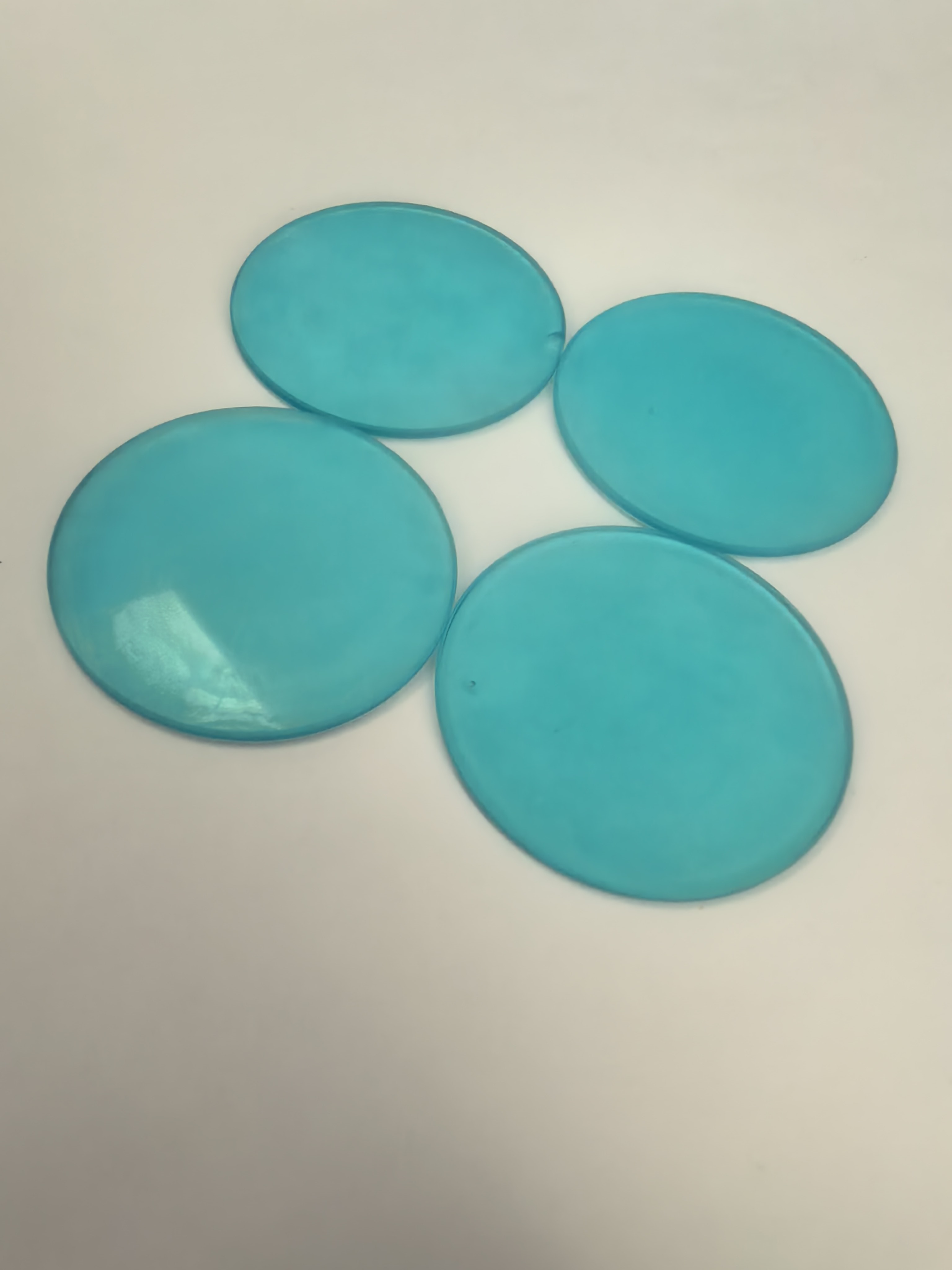
Premium QB21 Blue Bandpass Filter Glass for Precision Optical Applications
In the realm of advanced photonics and spectroscopy, the selection of high-quality optical components is paramount to achieving accurate data and superior image clarity. The Choose Absorption Type Optical Glass category offers a sophisticated solution for engineers and researchers who require precise control over specific wavelengths of light. At the forefront of this category is the QB21 Blue Bandpass Filter Glass, a critical component designed to isolate blue spectral bands with exceptional efficiency. This product, also referred to as Optical Blue Filter Glass QB21 or Blue optical Filter Glass QB21 C3C21, represents the pinnacle of absorption-based filtration technology, ensuring that only the desired light passes through while effectively blocking unwanted radiation.
The fundamental purpose of utilizing Choose Absorption Type Optical Glass lies in its ability to provide stable, durable, and highly selective filtering capabilities. Unlike interference filters which rely on thin-film coatings that can be sensitive to angle and environmental conditions, absorption filters utilize the intrinsic properties of the glass material itself. The QB21 variant is engineered to transmit light primarily within the blue spectrum, typically ranging from approximately 400nm to 500nm, while attenuating other wavelengths such as ultraviolet and infrared light. This characteristic makes it an indispensable tool in various scientific and industrial settings where color fidelity and spectral purity are non-negotiable requirements.
Key Characteristics of QB21 Blue Bandpass Filter Glass
The QB21 Blue Bandpass Filter Glass exhibits several distinct features that set it apart from standard optical materials. First and foremost is its high transmission rate within the designated blue band. This ensures maximum light throughput, which is crucial for applications involving low-light conditions or where signal intensity must be preserved. The filter demonstrates excellent homogeneity, meaning that the optical density is uniform across the entire surface of the glass, preventing distortions or uneven lighting in imaging systems.
Furthermore, the Choose Absorption Type Optical Glass construction of the QB21 model provides superior thermal stability. In environments where temperature fluctuations are common, many optical components may suffer from shifts in their spectral characteristics. However, the QB21 Optical Blue Filter Glass maintains its performance profile even under varying thermal loads, ensuring consistent results over time. This durability is complemented by its chemical resistance, allowing the filter to withstand cleaning agents and harsh industrial atmospheres without degradation of its optical properties.
Another significant attribute is the steep edge definition of the transmission curve. The Blue optical Filter Glass QB21 C3C21 variant is crafted to have sharp cutoffs at both the short-wavelength and long-wavelength ends of the passband. This sharpness minimizes leakage of adjacent wavelengths, thereby enhancing the contrast and specificity of the filtered light. For precision instruments, this level of spectral isolation reduces noise and improves the signal-to-noise ratio, leading to more reliable measurements and clearer images.
The Optical Blue Filter Glass QB21 is available in various standard sizes and thicknesses to accommodate different mounting configurations and optical path lengths. The surface quality is polished to meet stringent scratch-dig standards, ensuring minimal scattering of light. Scattering can degrade image quality by introducing haze or reducing contrast, so the high-grade finishing of the QB21 Blue Bandpass Filter Glass is essential for high-resolution applications. Additionally, the edges are often beveled or polished to prevent chipping during handling and installation, extending the lifespan of the component.
When comparing the QB21 to other similar products like the C3C21 designation, users will find subtle differences in the exact center wavelength and bandwidth width, tailored for specific niche applications. The C3C21 version might offer a slightly narrower passband for ultra-precise laser line selection or fluorescence microscopy, whereas the standard QB21 provides a broader coverage for general illumination and color separation tasks. Regardless of the specific variant, all models within the Blue optical Filter Glass family share the core benefit of being absorption-type filters, offering longevity and reliability that coated alternatives cannot match.
Application Scenarios
The versatility of Choose Absorption Type Optical Glass makes the QB21 Blue Bandpass Filter Glass suitable for a wide array of industries. In medical diagnostics, particularly in flow cytometry and fluorescence microscopy, precise excitation and emission filtering are required to distinguish between different labeled biomarkers. The QB21 Optical Blue Filter Glass allows researchers to isolate specific fluorophores that emit in the blue region, enabling clear visualization of cellular structures without background interference.
In the field of machine vision and industrial inspection, color sorting machines rely heavily on spectral filters to differentiate materials based on their color properties. The Blue optical Filter Glass QB21 C3C21 is used to enhance the contrast between blue-colored items and their surroundings, improving the accuracy of automated sorting systems. This application benefits greatly from the high transmission and sharp cutoff characteristics of the filter, which ensure that the camera sensors receive clean, well-defined signals.
Laser systems also utilize these filters for beam shaping and protection. By placing a QB21 Blue Bandpass Filter Glass in the optical path, operators can block harmful infrared radiation generated by the laser source while allowing the visible blue beam to pass through. This protects downstream optics and detectors from damage while maintaining the integrity of the laser beam. Furthermore, in scientific instrumentation such as spectrophotometers and monochromators, the filter serves as a primary element for selecting specific wavelengths for analysis, contributing to the overall accuracy of quantitative measurements.
User Feedback and Performance Insights
Professionals who have integrated the Choose Absorption Type Optical Glass into their setups frequently report high satisfaction with the consistency and durability of the QB21 series. Users note that unlike interference filters which may shift performance when tilted or exposed to humidity, the absorption-based design of the Optical Blue Filter Glass QB21 remains stable over years of use. This reliability translates to reduced maintenance costs and fewer calibration interruptions in laboratory and production environments.
Many engineers appreciate the ease of integration provided by the standard dimensions and robust build quality of the Blue optical Filter Glass QB21 C3C21. The lack of coating sensitivity simplifies cleaning procedures, allowing technicians to maintain the optics without fear of damaging delicate layers. Reviews often highlight the improved image clarity and measurement precision achieved after switching to these absorption filters, particularly in applications requiring high dynamic range and low noise levels.
Similar Video Recommendation


If you are interested in the product, contact Bossgoovideo.com for more information
- *To:
- Nantong Jingsheng Optical Instruments Co., Ltd.
- *Message:
-
Submit
Main Product:
Cutoff optical filter,
Select absorbing optical filter,
Neutral gray optical filter,
Bandpass optical filter ,
Colorless optical filter,
Prism lens