
1D Brand High quality Cylinder liner Video
2 year ago
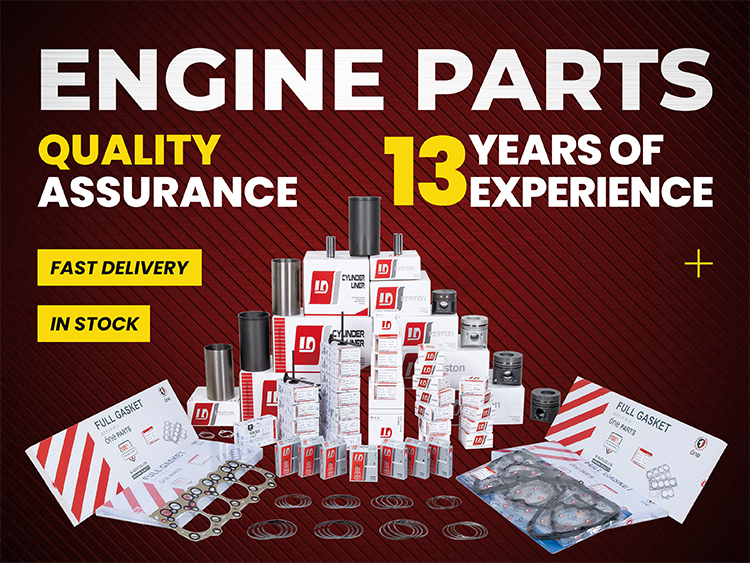
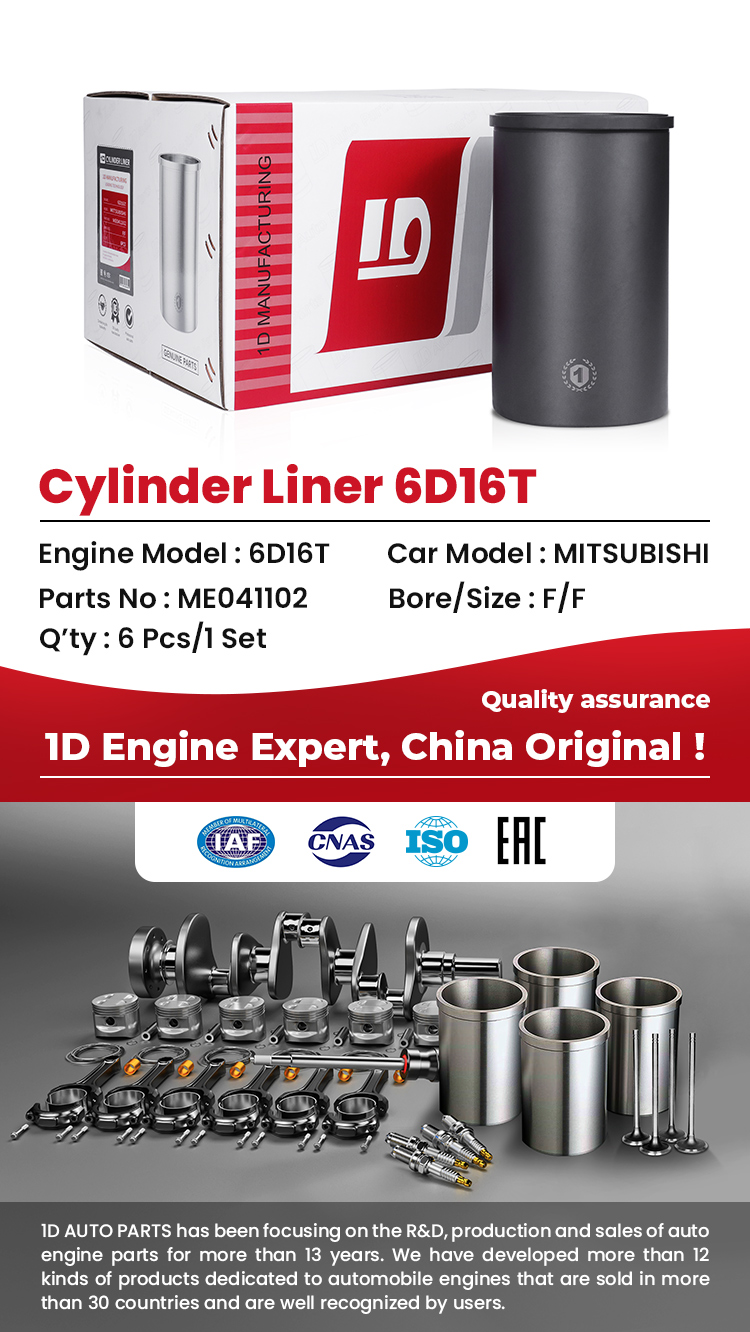

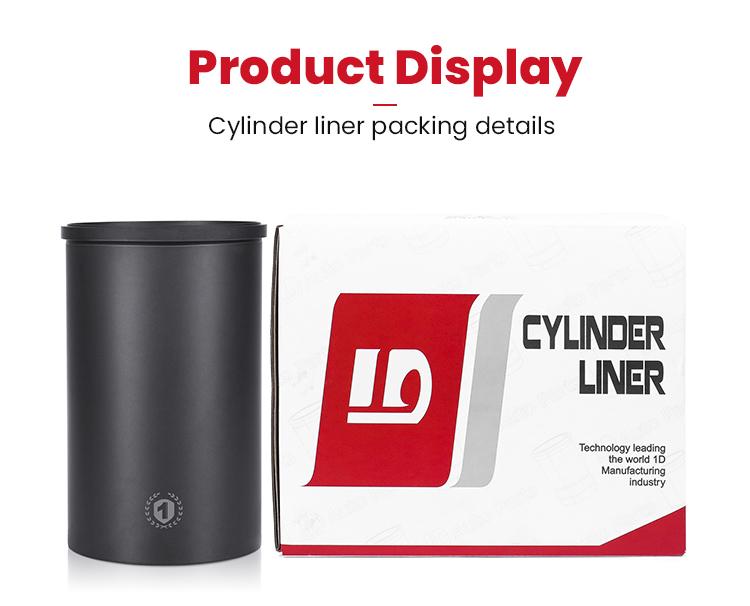
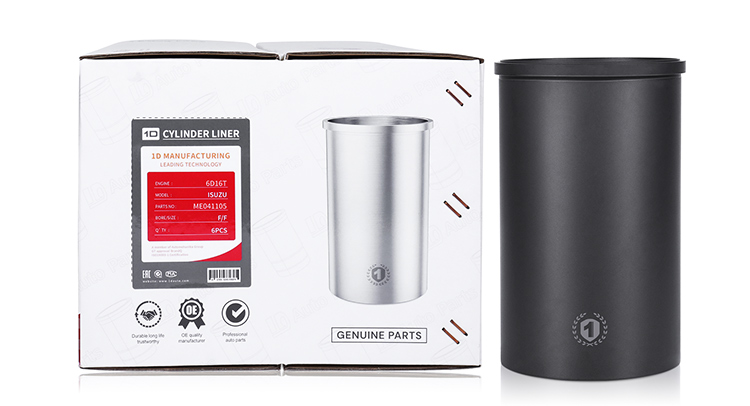
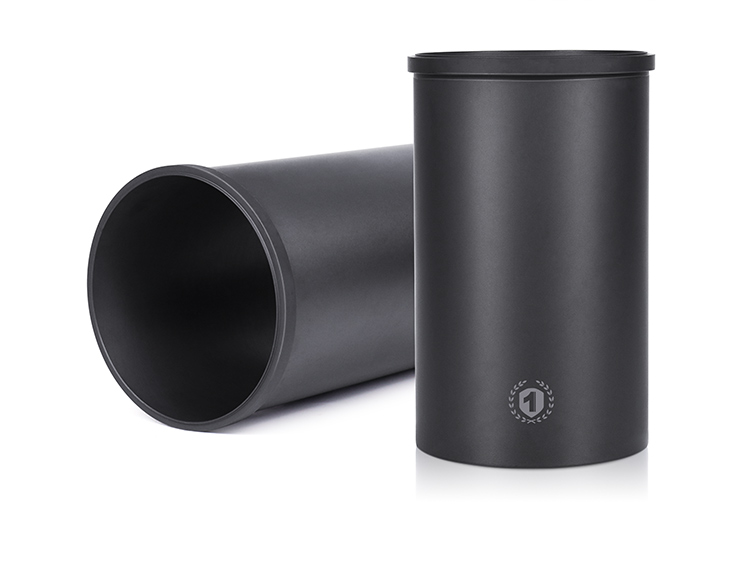
1D Auto Parts Co; Ltd is professional at high quality engine parts, we focus on Piston,Piston Ring,Cylinder Liner,Spark Plug,Glow Plug,Ignition Coil,Engine Valve,Sealant .
We have over 20 years of experience in OEM production,lmport-Export, management, quality control and market orientated R&D.We are able to meet customer requirement of high quality.sufficiency stock, variety of 5000 models and different size,as well as product packing & brand design, with the aim of establish a very competitive advantage for businesses.
What is the 100-year history of cylinder liner evolution?
Since the invention of the four-stroke engine by Otto in 1876, the cylinder liner has undergone five technological revolutions, each of which has promoted the progress of industrial civilization.
1. Embryonic period (1876-1910) : The beginning of the iron age
For the first time, the Otto engine has an integral cast iron cylinder without a separate liner design, requiring a complete replacement for maintenance. After Diesel invented diesel engine in 1892, in order to solve the problem of single cylinder wear, there was a removable gray cast iron cylinder liner, the wall thickness of 20mm, the surface is only simple polishing, and the wear rate is as high as 0.1mm / 100 hours.
2. Industrialization period (1910-1950) : standardization and popularization of wet cylinder liner
1920s: The Ford Model T uses dry cast iron cylinder liner with a wall thickness of 10mm, and reduces the cost from $200 to $20 through mass production, promoting the popularization of automobiles.
1940's: With the increase of diesel engine power, wet cylinder liner was born (such as GM 6-71 engine), coolant directly cooled cylinder liner, heat efficiency increased by 50%, wall thickness reduced to 8mm.
3. Material Revolution period (1950-1990) : from ordinary cast iron to special materials
1955: High phosphorus cast iron (P=0.3%) applied to truck engines, wear resistance increased by 30%, to solve the corrosion problem of sulfur-containing fuel.
1970: Ductile iron (QT450-10) is introduced, which greatly improves toughness and ADAPTS to the vibration environment of high-speed engines (such as the Toyota 20R engine).
1980s: Plasma spraying technology was introduced, cylinder liner surface hardness exceeded HV1000, and motorcycle engine speed exceeded 10000rpm for the first time.
4. Precision manufacturing period (1990-2010) : the pursuit of micron precision
1995: CNC honing machine is popularized, cylinder liner surface roughness is reduced from Ra1.0μm to Ra0.2μm, piston ring leakage is reduced by 40% (such as Volkswagen EA113 engine).
2005: The CV5 material of vermicular graphite cast iron was successfully developed, which solved the problem of organization uniformity of thick wall cylinder liner and promoted the single cylinder power of Marine diesel engine to exceed 10000kW.
5. Intelligent period (2010 to date) : the explosion of lightweight and coating technology
2012: The BMW N55 engine uses arc sprayed aluminum-silicon coated cylinder liner, replacing the traditional cast iron cylinder liner, reducing the weight by 15% and fitting the aluminum alloy cylinder block.
2018: CSSC broke the foreign monopoly and became the second enterprise in the world to master the mass production technology of CV5 materials, promoting the localization rate of China's Marine cylinder liner from 30% to 70%.
2023: The 3D printing cylinder core technology is mature, and the complex cooling water channel design improves the thermal efficiency of the cylinder liner by 5%, which is applied to BYD DM-i range extender.
Similar Video Recommendation


If you are interested in the product, contact Bossgoovideo.com for more information
- *To:
- 1D auto parts
- *Message:
-
Submit
Main Product:
Engine piston,
cylinder liner,
spark plug,
Ignition coils,
head gasket,
Engine Valve