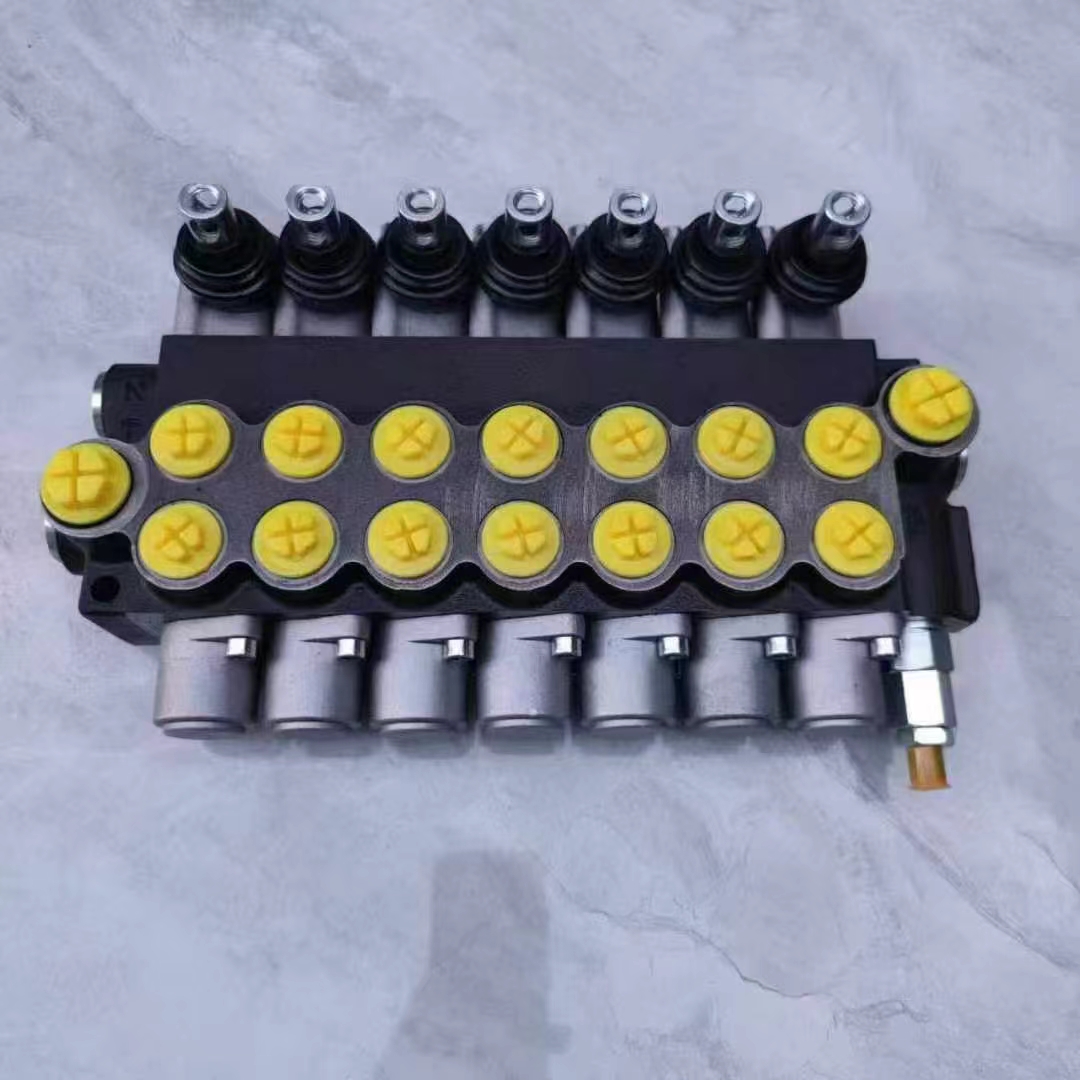
Hydraulic Valve Multi-way Valve
I. Definition
A hydraulic multi-way valve is a hydraulic component with multiple control functions, which integrates multiple directional valves, throttle valves, relief valves, and other functions within a single valve body to achieve independent or coordinated control of multiple actuators (such as cylinders and motors) in the hydraulic system.
II. Functional Characteristics
1. Multi-channel Control: The hydraulic multi-way valve has multiple oil ports, allowing it to connect to multiple actuators and achieve simultaneous control of them.
2. Integrated Design: By integrating multiple hydraulic control functions within a single valve body, it reduces the number of valves required in the system and simplifies the system structure.
3. Efficient and Energy-saving: Optimized oil circuit design minimizes energy loss and improves system efficiency.
4. Flexible and Reliable: It allows for adjustment of valve opening and closing sequences, as well as throttle orifice sizes, to achieve flexible control and reliable operation.
III. Application Scenarios
Hydraulic multi-way valves are widely used in various hydraulic systems, such as construction machinery, agricultural machinery, metallurgical equipment, and ships. In these fields, hydraulic multi-way valves enable precise control of multiple actuators, meeting the operational requirements of complex working conditions.
IV. Working Principle
The working principle of a hydraulic multi-way valve mainly involves the movement of the valve spool to change the opening and closing of oil passages and the direction of fluid flow. When the valve spool is in a certain position, specific oil passages are connected, allowing fluid to flow along those passages. When the valve spool moves to another position, the original oil passages are cut off, and new oil passages are connected, thereby achieving fluid direction change and throttle control.