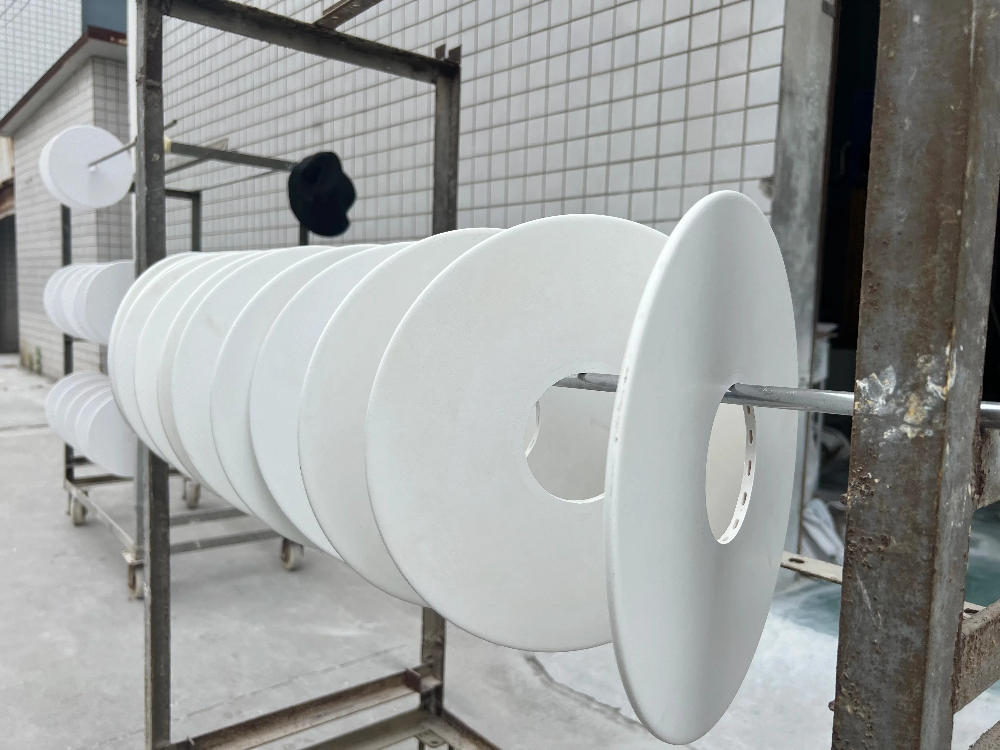
Ceramic membrane, also known as inorganic ceramic membrane, is an asymmetric membrane formed by special processes of inorganic ceramic materials. Ceramic membranes are divided into two types: tubular ceramic membranes and flat ceramic membranes. Please note that 'CT membrane' is not an alias for ceramic membrane, and this term is actually an incorrect expression of the English abbreviation for ceramic membrane by non professionals. The wall of the tubular ceramic membrane is densely covered with micropores. Under pressure, the raw material liquid flows inside or outside the membrane, small molecule substances (or liquids) pass through the membrane, and large molecule substances (or solids) are intercepted by the membrane, thus achieving the purposes of separation, concentration, purification, and environmental protection. The flat ceramic membrane surface is densely covered with micropores, and the permeability varies depending on the diameter of the molecules that permeate within a certain range of membrane pore size. The pressure difference on both sides of the membrane is used as the driving force, and the membrane is used as the filtering medium. Under a certain pressure, when the liquid flows through the membrane surface, only water, inorganic salts, and small molecule substances are allowed to pass through the membrane, while large molecule substances such as suspended solids, gel, and microorganisms in water are prevented from passing through. Ceramic membranes have many advantages such as high separation efficiency, stable effects, good chemical stability, acid and alkali resistance, organic solvent resistance, bacterial resistance, high temperature resistance, pollution resistance, high mechanical strength, good regeneration performance, simple separation process, low energy consumption, easy operation and maintenance, long service life, etc. They have been successfully applied in many fields such as food, beverage, plant (medicine) deep processing, biomedicine, fermentation, fine chemical industry, etc. They can be used for separation, clarification, purification, concentration, sterilization, desalination, etc. in the process.