POM Sheet (Polyoxymethylene Sheet) is a high-performance thermoplastic engineering plastic sheet made from polyoxymethylene (POM) through high-temperature extrusion or injection molding. As a highly crystalline polymer, its dense molecular structure gives it mechanical properties close to those of metal, making it one of the "hardcore" representatives of engineering plastics.
Ⅰ. Core Characteristics of POM Sheets
The characteristics of POM sheets can be summarized as high rigidity, high strength, high wear resistance, excellent dimensional stability, self-lubrication, and good chemical corrosion resistance:
Outstanding Mechanical Properties: Tensile strength reaches 60-70 MPa, elastic modulus is approximately 2800 MPa (far exceeding ordinary ABS), high hardness, creep resistance (no deformation under long-term stress), and excellent fatigue resistance (not easily damaged by repeated friction), earning it the reputation of "Iron Man of the plastics world."
Good Dimensional Stability: Low water absorption (weak water absorption), minimally affected by temperature and humidity, does not easily expand or shrink over long-term use, suitable for precision parts manufacturing.
Excellent Self-Lubrication: Dynamic friction coefficient is only 0.1-0.2 (lower than nylon and polyethylene), allowing stable operation in sliding contact parts without additional lubrication, reducing wear.
Chemical Corrosion Resistance: Resistant to solvents, oils, and weak acids and alkalis, but not resistant to strong acids and alkalis (such as concentrated sulfuric acid and sodium hydroxide) and long-term ultraviolet radiation (will yellow and age).
Excellent machinability: It can be formed by turning, milling, drilling, hot pressing and other processes, making it suitable for manufacturing precision parts with complex shapes (such as gears and sliders).
POM Sheet, Some called it Delrin Sheet.
Ⅱ. Main Application Areas of POM Sheets
POM sheets are used in multiple industries, including automotive, electronics, machinery, medical, and construction. Core applications include:
Automotive Industry: Used to manufacture fuel system parts (such as carburetors), transmission components (such as gears and universal joints), and interior parts (such as dashboard covers), utilizing their oil resistance and low friction properties to replace metal parts and reduce weight.
Electronics and Appliances: Electronic housings (such as washing machines) and precision parts (such as printer rollers and camera shafts), utilizing their insulation and dimensional stability.
Machinery Manufacturing: Sliding bearing sleeves, guide rails, gears, and other transmission components, utilizing their self-lubricating and wear-resistant properties to reduce equipment maintenance costs.
Construction and Agriculture: Water pipe fittings and agricultural machinery parts (such as sprinkler irrigation equipment parts), utilizing their weather resistance and corrosion resistance.
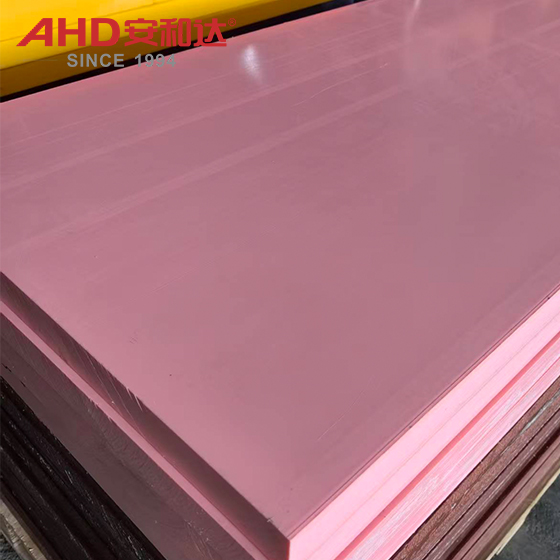
Ⅲ. The Role of Colored POM Sheets
Colored POM sheets on the market (such as black, white, yellow, blue, green, red, etc.) are not merely decorative.
Functional Differentiation: Yellow, blue, green, and red colored sheets are used for product appearance identification or to differentiate uses, enhancing product recognizability.
Aesthetic Design: Colored sheets provide inspiration for industrial design, such as smart home decorative components and children's toy parts, balancing functionality and aesthetics.
POM sheets are high-performance, multi-functional engineering plastic sheets. Thanks to their excellent mechanical properties and dimensional stability, they have become a "core material" in industries such as automotive, electronics, and machinery. Colored POM sheets, while retaining their basic properties, expand their application scenarios through visual differentiation, meeting the specific needs of different industries. For users, choosing colored POM sheets satisfies both their performance requirements and allows for differentiation or aesthetic preferences.


