
For swimming pool water treatment chemical of cyanuric acid (CYA) 108-80-51
4 year ago
There are many kinds of reciprocal isomers; tri-NH-type, di-NH-type, mono-NH-type, trinity-OH-type. The tri-NH-type is predominant. White crystals (water), odourless, bitter taste. mp 360°C, bp 150-180°C (2.67Pa), sublimation, dl. 768. soluble in water, hot ethanol, pyridine, concentrated hydrochloric acid and sulphuric acid, insoluble in ethyl ether, acetone, chloroform and benzene. Can sublimate, high temperature decomposition to cyanuric acid. Reacts violently with ethanol and forms explosive products in contact with chlorine.
Production method of cyanuric acid
There are the following synthesis methods:
Urea pyrolysis method Obtained by pyrolysis and cyclisation.
Urea salt pyrolysis method That is, urea and sulfuric acid (or hydrochloric acid, nitric acid) to 4.5:4 (hoe) for mixing, the temperature of 200 ℃, the reaction of 5h, the Cyanuric Acid yield of 50% to 53%, the content of 9726-98%.
Nitric oxide method Hydrogen, carbon monoxide, nitric oxide as raw materials, palladium, iridium as catalyst, at 280 ~ 480 ℃ direct synthesis of cyanuric acid, yield 60% ~ 75%. This method has been industrialised.

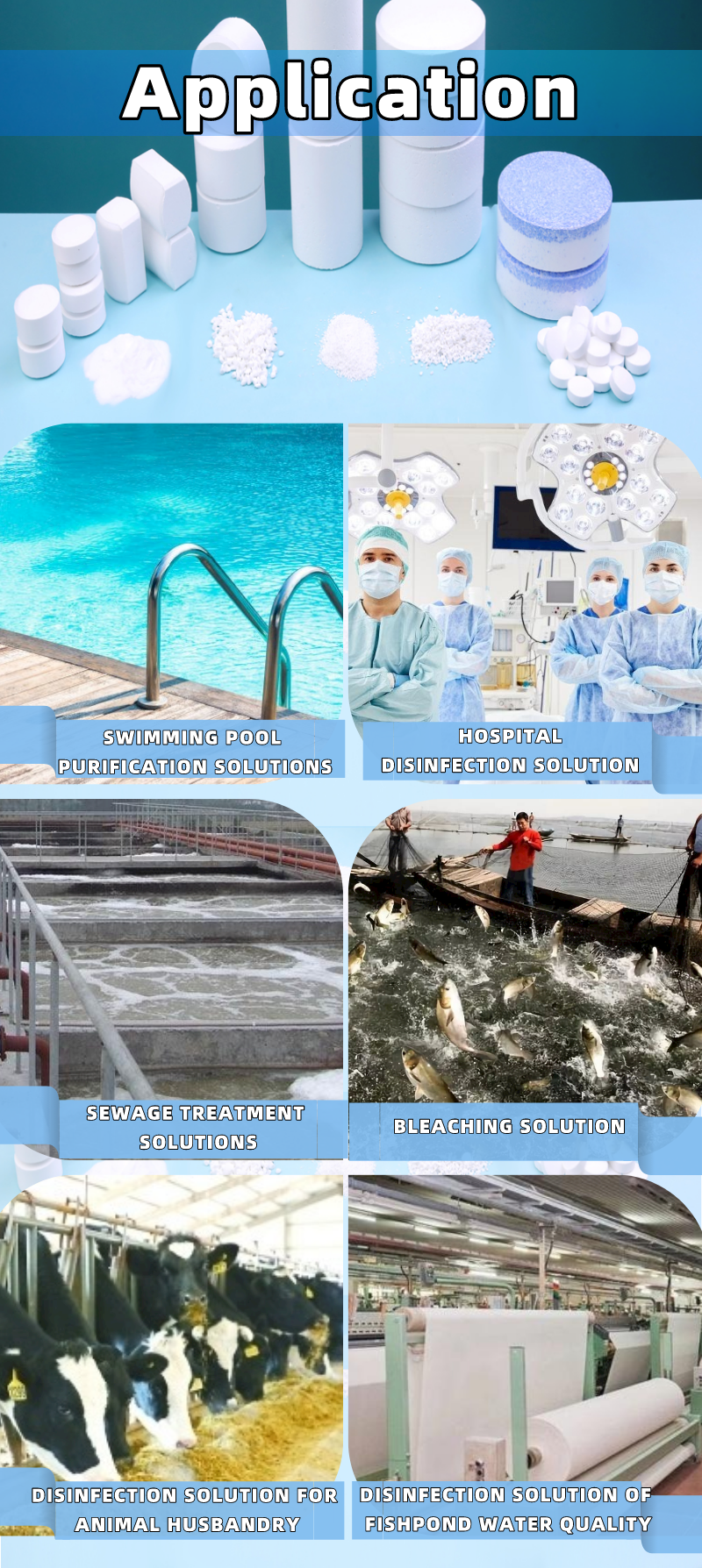
2)It can be used in the synthesis of new disinfectants, water treatment agents, bleaching agents, chlorine,antioxidants, paint coatings, selective herbicides and metal cyanide moderators
3)It can also be directly used as chlorine stabilizer for swimming pools, nylon, plastic, polyester flame retardants and cosmetic additives, special resins. synthesis, etc.
Company information
(1)Catalysts and Auxiliaries:A catalyst is a substance that changes the rate of reaction in a chemical reaction while its own composition and quality remain unchanged after the reaction. A catalyst that speeds up a reaction is called a positive catalyst (Positive Cata-lyst), and one that slows it down is called a negative catalyst (Negative Catalyst) or retardant. Generally speaking, catalysts are positive catalysts.
Auxiliary agent refers to the industrial and agricultural production, especially in chemical production, in order to improve the production process, improve product quality and yield, or to give the product some unique application performance, usually need to add some auxiliary chemicals,widely used in the chemical industry.
(2)Organic Raw Materials:It has a wide range of uses, which can be divided into three aspects: first, it is used as a raw material for the production of polymer chemical products, i.e., monomers for polymerisation reactions; second, it is used as a raw material for other organic chemical industries, including fine chemical products; and third, it is used as a solvent, refrigerant, antifreeze, and gas adsorbent. Basic organic chemical industry is the basis for the development of the production of various organic chemical products, is the main component of the modern industrial structure.Our Organic Raw Materials include Industrial ethylene、Ester compounds、Hydrocarbon compounds.
Similar Video Recommendation


If you are interested in the product, contact Bossgoovideo.com for more information
- *To:
- Henan Kepeiao New Materials Co.,Ltd.
- *Message:
-
Submit
Main Product:
Catalysts and Auxiliaries,
Organic Raw Materials,
Flavors and Fragrances ,
Coatings Intermediates,
Water Treatment,
Rubber Products