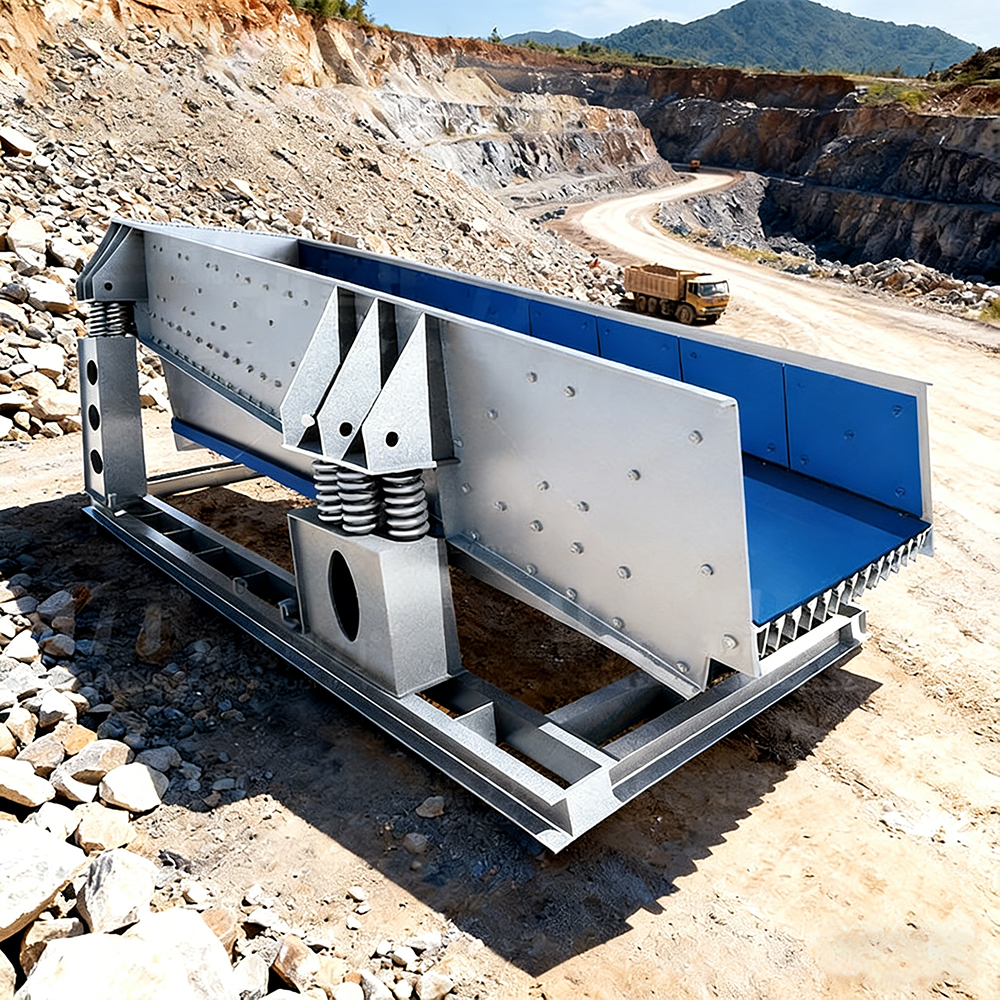
Heavy-Duty Vibrating Feeder Equipment
Vibrating feeder Equipment Overview
This equipment was specifically developed for the harsh operating conditions of mines in the Middle East and Africa, addressing three major pain points: frequent blockages caused by wet, sticky materials; noise levels exceeding standards, leading to complaints; and rapid wear-through under hard ore conditions. The bar-type anti-blockage diversion structure, combined with a stepless speed control system, reduces blockages by 90 percent compared to standard models and keeps feed rate deviations within 2 percent. Spring vibration damping and an enclosed drive system keep noise levels below 85 decibels. Vibrating components are strengthened through quenching and tempering; sealed bearings have a design life of five to seven years, with a failure rate of only 0.25 per thousand over 1,000 hours of operation, and the unit undergoes a 168-hour full-load test before shipment. High-efficiency, energy-saving motors reduce power consumption by 20 percent compared to traditional models. Suitable for feeding high-hardness ores such as iron ore, copper ore, granite, and basalt; preventing blockages during the transportation of wet ore and sand-silt-laden materials during the rainy season; providing all-weather continuous feeding of metallurgical raw materials and raw coal; and long-term outdoor operation in the high-temperature, dusty environments of the Middle Eastern desert.
Vibrating feeder Process Flow
After the raw material enters the feeder hopper, the vibration motor drives the trough to vibrate at a preset frequency, causing the material to move forward evenly along the bar-type diversion structure. Fine particles are prioritized to fall through the gaps between the bars into the downstream crusher, while larger chunks continue to the end of the trough and drop into the feed inlet. The stepless speed control system automatically adjusts the feeding rate based on downstream load, ensuring the main crusher operates at full capacity without overload. The bar-type anti-clogging structure prevents wet and sticky materials from adhering or accumulating; spring vibration dampers isolate vibration transmission; and an enclosed drive housing reduces mechanical noise. The entire unit provides stable material feeding while achieving low-noise, environmentally friendly operation.
Vibrating feeder Services
We provide a one-stop solution ranging from operating condition assessment, material testing, and model selection and design to equipment manufacturing and supply, installation and commissioning, operator training, and outsourced operation and maintenance. During the design phase, the bar spacing and trough inclination are determined based on ore hardness and clay content. During installation, on-site guidance is provided for vibration-damping foundation installation and electrical interlock commissioning. Operation and maintenance services include sealed bearing inspections, preventive replacement of wear parts, and remote fault diagnosis.
Vibrating feeder Project Case Study
At a large copper mine in Zambia, where the site contains high-hardness copper ore and wet, sticky surface clay, the original feeder suffered from severe clogging, resulting in two to three daily production stoppages for clearing blockages. After replacing it with our anti-clogging, low-noise vibrating feeder, clogging ceased, downtime was reduced by 90%, noise levels met environmental standards, and the equipment has operated continuously for over 12 months without major faults. Customer feedback: “The anti-clogging bar design completely solved our feeding problems. We used to shut down 2–3 times a day during the rainy season. After switching to your feeders, we’ve had zero clogging-related downtime. Noise levels dropped below local limits, and the equipment has run for over 12 months without major issues despite the harsh mix of hard copper ore and sticky clay. We’ve ordered additional units and recommended them to neighboring mines.”
Vibrating feeder FAQ
Q: Can mining vibrating feeders handle highly moist, sticky materials?
A: Yes. The bar-type anti-clogging vibrating feeder’s specialized diverter structure is optimized for wet, sticky materials, reducing clogging by 90 percent compared to standard models. Mining Vibrating Feeders Ensure Uniform Feeding of High Hardness Ore It performs exceptionally well during the African rainy season and in high-silt-content operating conditions.
Q: How loud are low-noise feeders, and can they be used in mines?
A: Spring vibration damping and enclosed noise reduction keep noise levels below 85 decibels, classifying them as low-noise feeders that comply with local environmental and operational safety standards.Low Noise Feeding Equipment Manufacturer for Mining Equipment.
Q: How durable are they when processing high-hardness ore over the long term?
A: The drive components undergo reinforced quenching treatment, and the sealed bearings have a service life of five to seven years. Installation and Commissioning Services for Mining Vibrating Feeder Production Lines Each unit undergoes a 168-hour full-load test before shipment, with a failure rate of only 0.25‰ over 1,000 hours of operation, making it capable of high-intensity continuous feeding of high-hardness ores such as iron ore and copper ore.