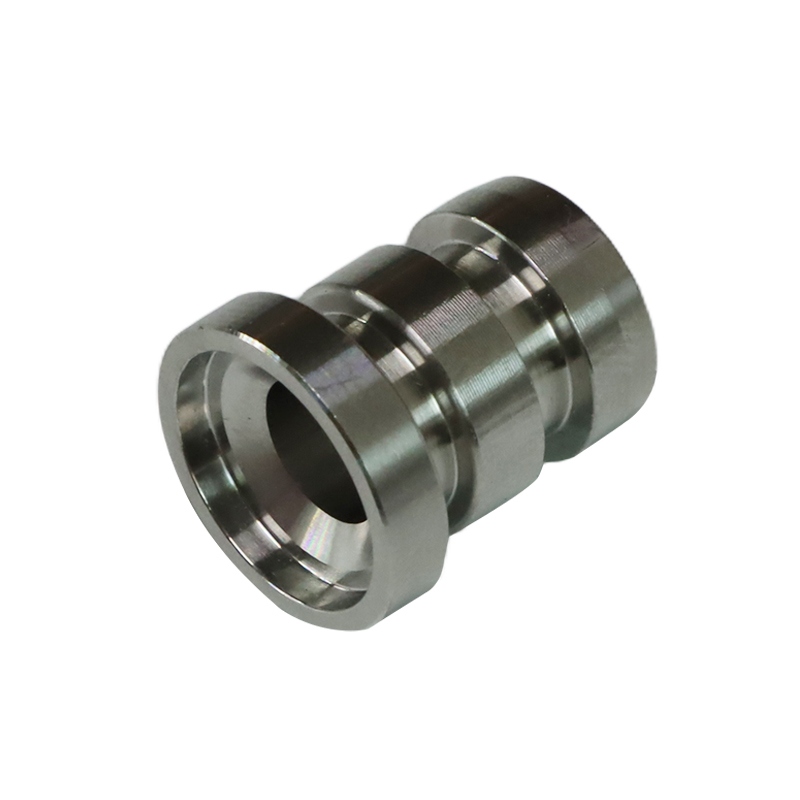
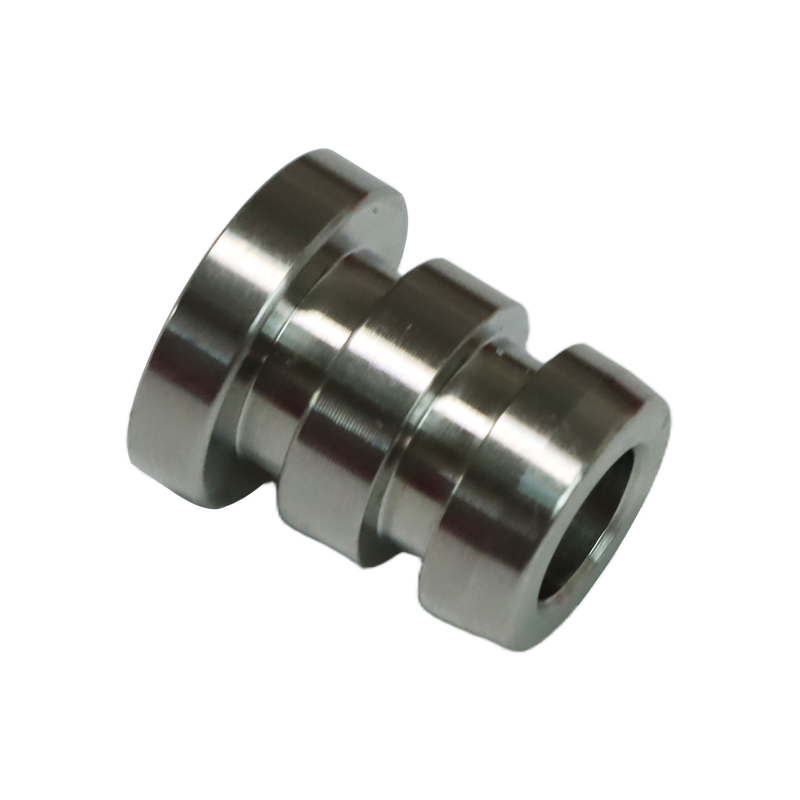
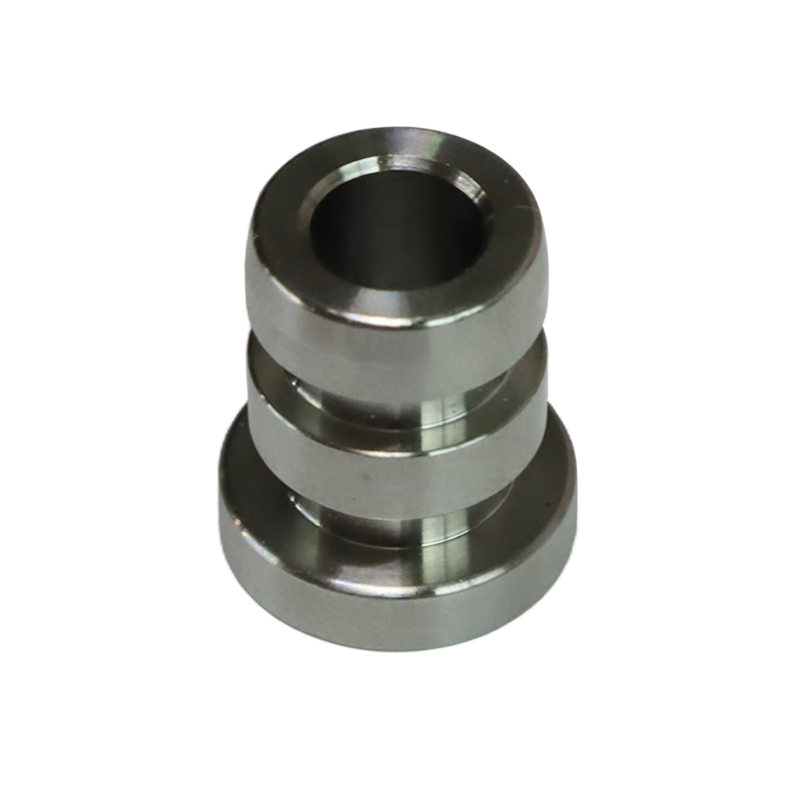
The automotive coupling nut part is precisely machined in 304 stainless steel and has a two-stage structure: a large flange at the front end for centering and limiting, a stable O-ring with a circular tread in the middle, and a chamfered inner thread at the rear end to ensure smooth screwing in.
Step 1: With automotive coupling nut metal turning service as the core and based on the high precision CNC turning center "TSUGAMI CCRP" a fully automatic tournament center with automatic loading and unloading equipment is used for making orders of 10000pcs. First, it quickly removes most of the excess at a machining speed of about 3000 rpm and maintains a uniform edge of 0.2 mm. for later precision mechanization.
Step 2: During precision machining, the speed of the pliers is increased to 3500 rpm, and Mitsubishi ceramic blades are used throughout the process, in combination with the R0.2 parameter of the tool tip, to easily achieve a surface effect of high uniformity at the level R0.8.
Step 3: After completing the CNC turning of the outer step, for the high precision bearing inner holes with stepsinner openings with passages, use a machine with high rigidity inner openings, to attach the tool for precision mechanization. The tool requires little time to replace the blade, and can ensure the stability of the rotational sizes. Relying on the advantages of automotive coupling nut Precision CNC Turning Services technology throughout the process, efficient and stable series production is achieved, ensuring that the dimensional accuracy and interchangeability of each product meet the standards.
ShenZhen Shengpeng is a professional CNC machining manufacturer specializing in researching and manufacturing CNC turned parts, providing reliable turning services. The dimensional specifications, material selection, structural design and surface treatment methods can be flexibly adapted to the requirements, so you can create your vehicle connections and various precision parts, meet the different application scenarios and fully meet the different requirements of production and use.