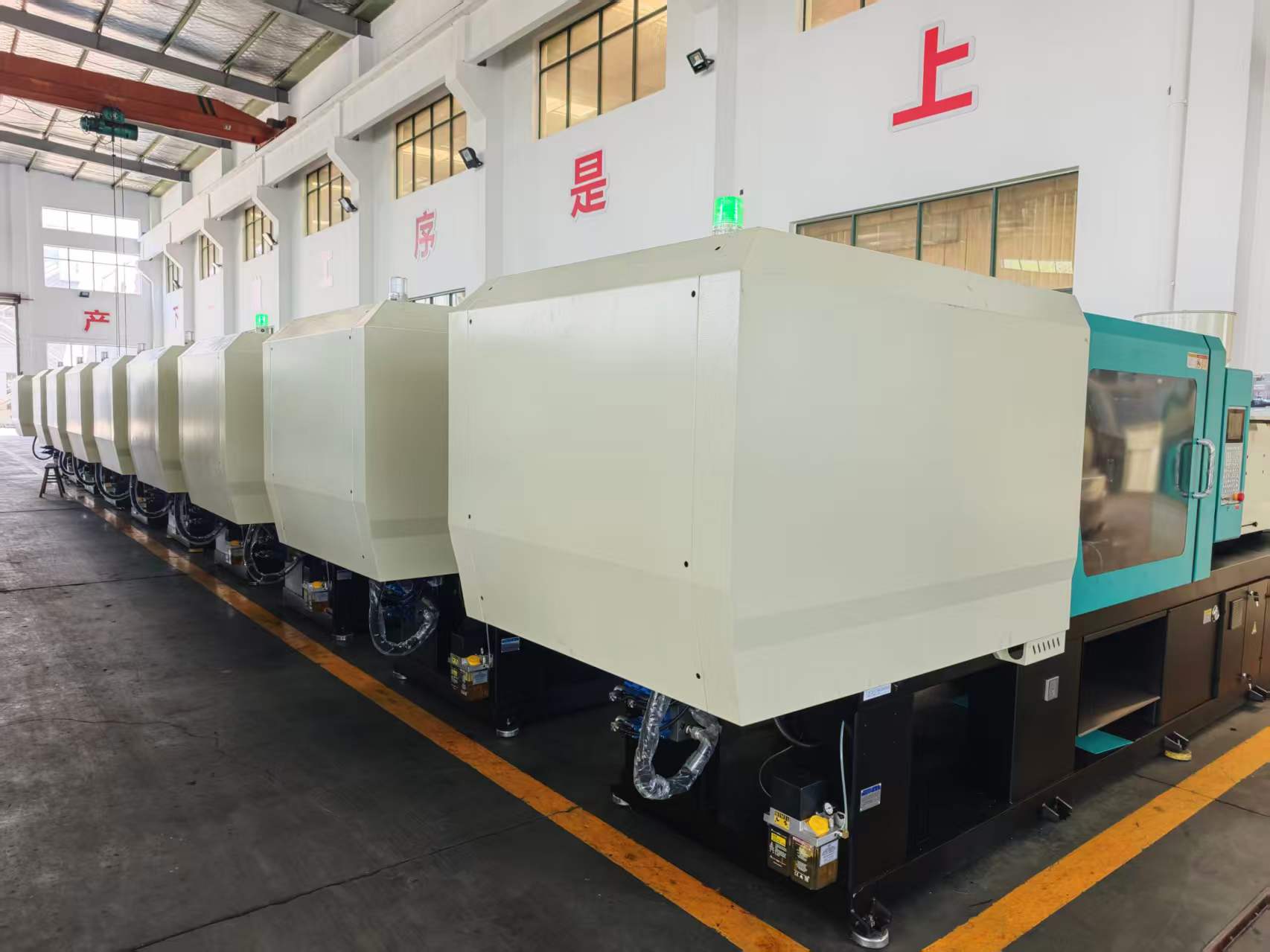
During the expansion stage of the PET packaging industry, many processing factories face a common practical dilemma. Although standard equipment provides sufficient clamping force, it often suffers from uneven mold stress, unstable barrel thermal history, and time-consuming material switching and debugging during long-term continuous production with multi-cavity hot runner molds. Classified in the Special Injection Molding Machine Series, this model is not designed for extreme experimental parameters. Instead, it is iterated specifically for the mass production of medium and large-sized PET preforms and food packaging containers. As a reliable and practical Plastic Machinery, it perfectly adapts to the actual upgrading and expansion needs of small and medium-sized packaging factories.
Unlike small-tonnage devices that are only suitable for low-cavity preform production, the 278-ton model features a reinforced clamping structure tailored for heavy-duty PET hot runner Plastic Mold. The whole machine undergoes complete stress-relief annealing treatment and is equipped with upgraded tie bars and mold plates, effectively mitigating micro-deformation caused by long-term high-speed cyclic operation. Built with a sensitive low-pressure mold protection system optimized for high-cost hot runner molds, it greatly reduces maintenance costs from accidental mold collision and damage. In multi-cavity production scenarios, it ensures balanced clamping force distribution across all cavities, minimizes wall thickness deviation of PET preforms, and stabilizes batch product consistency.
Functioning as a high-efficiency Servo Energy‑saving Injection Molding Machine, this equipment delivers optimization far beyond basic power saving. The cooling process accounts for most of the PET molding cycle. Conventional machines generate continuous hydraulic heat during the cooling phase, leading to oil temperature drift that disturbs barrel temperature stability and aggravates hydrolysis and thermal degradation of PET materials. This machine adopts recalibrated servo response logic, which actively reduces system output power during cooling, suppresses hydraulic oil temperature rise, stably maintains precise barrel processing temperature, reduces defective products caused by temperature fluctuations, and cuts long-term factory power consumption costs significantly.
For PET processing, the matching performance of auxiliary equipment directly determines the finished product yield, and the performance of the main machine cannot be fully exerted without supporting systems. The complete production solution can be equipped with professional Plastic Auxiliary Equipment, including Drying Machine, Autoloader Machine and Mold Temperature Controller for coordinated operation. Adequate dehumidification and drying of raw materials, stable automatic feeding, and precise mold temperature control effectively avoid core process pain points such as PET hydrolysis. Many factories only upgrade the main injection device while ignoring auxiliary supporting systems, resulting in common defects like insufficient transparency and silver streaks on finished products. The integrated main and auxiliary machine solution fully meets the turnkey production requirements of overseas customers.
In terms of injection and plasticizing systems, the customized screw and barrel are optimized for the high-viscosity melting characteristics of PET materials, which controls shear heat efficiently and prevents thermal degradation of raw materials. It is not only applicable to conventional PET preform production, but also compatible with the molding of transparent thick-walled daily chemical packaging containers. Adopting a streamlined operation system without redundant complicated functions, the injection machine features low operation threshold for on-site workers. Meanwhile, it reserves sufficient process adjustment margin, supporting the molding of multiple non-PET plastic products and leaving flexible business expansion space for manufacturers.