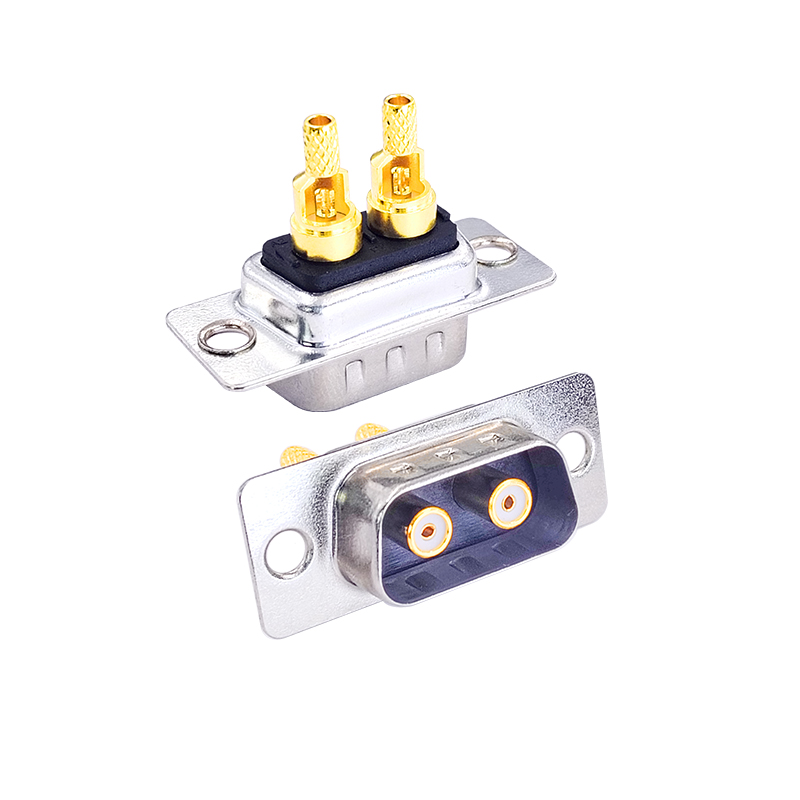
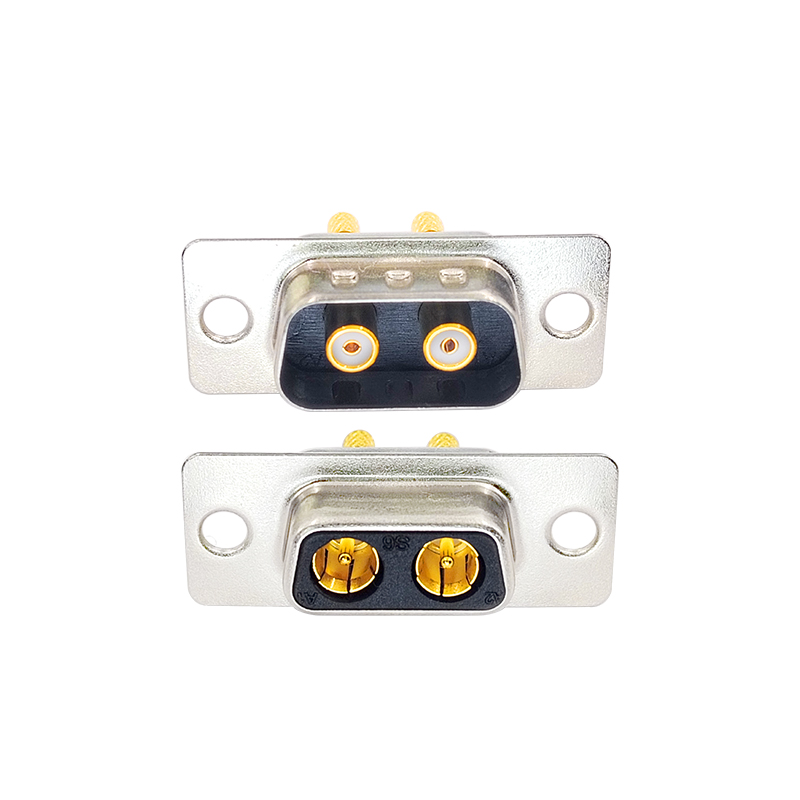
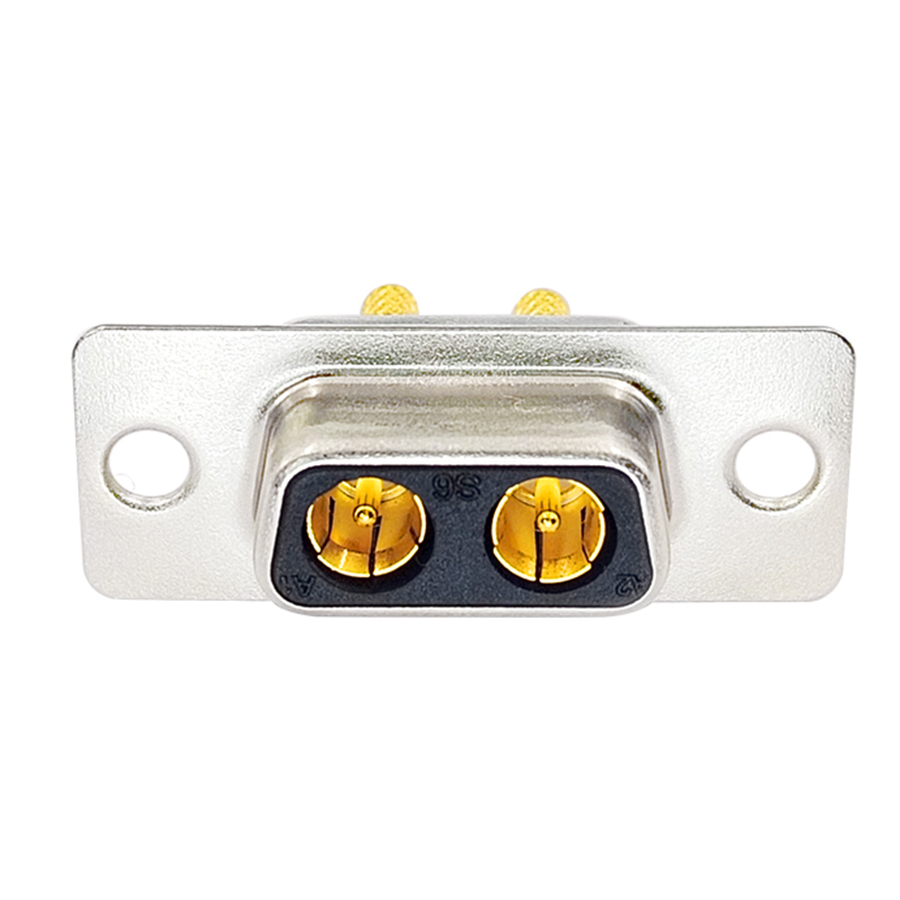
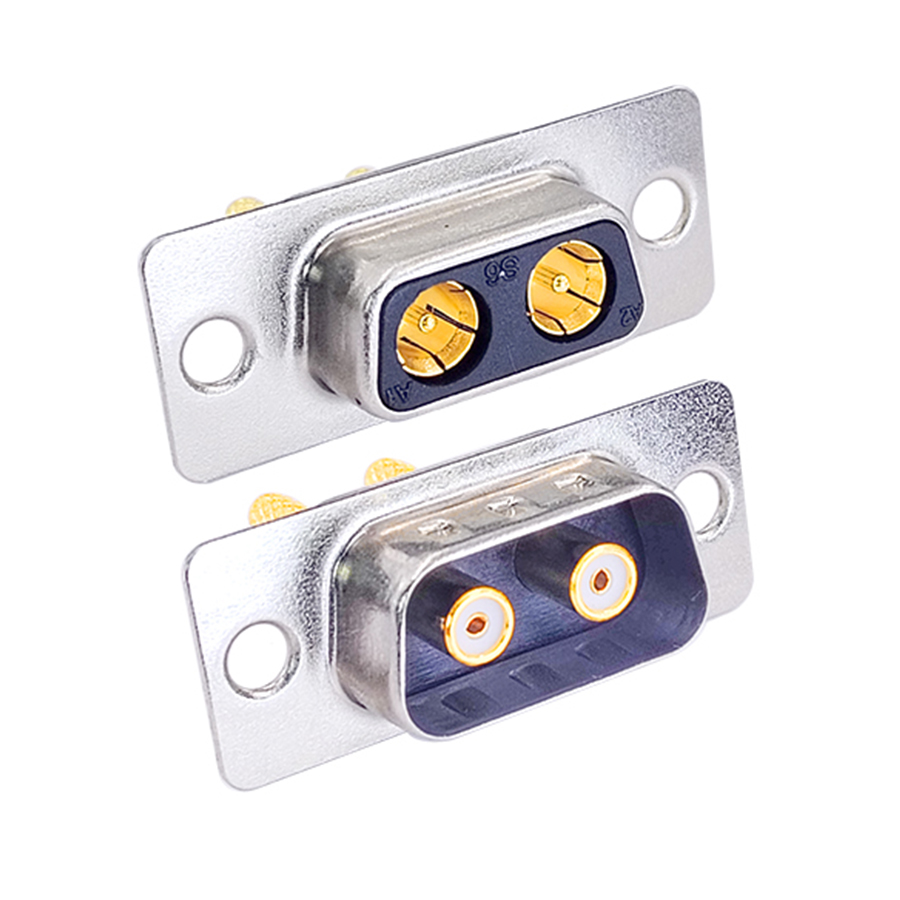
The 2W2 RF d sub connector is a highly integrated hybrid interface within the D-Sub (D-Subminiature) series of connectors. It cleverly combines RF coaxial transmission with power/signal transmission capabilities within a single compact housing. This dsub connector typically follows the naming convention of “2W2,” indicating that it contains 2 RF coaxial channels (W represents coaxial, 2 represents the number), and can be flexibly mixed with power pins or signal pins according to design requirements.
From a physical structure perspective, the 2W2 RF d connector famale and male typically offers various mounting options, such as direct insertion or 90-degree angled insertion (right-angle), to accommodate different PCB board layouts and spatial constraints. Its core components include an outer conductor, an inner conductor, and an insulating support medium (such as PTFE, PEI, etc.). To ensure excellent electrical performance, the inner conductor is often plated with gold or silver alloys, while the outer conductor is commonly treated with stainless steel passivation or nickel/ternary alloy plating on copper alloys to ensure low contact resistance and excellent corrosion resistance.
In terms of electrical performance, the characteristic impedance of a 2W2 connector typically ranges from standard 50Ω, enabling the transmission of high-frequency signals ranging from direct current (DC) to several GHz. Key metrics include voltage standing wave ratio (VSWR), insertion loss, and contact resistance. High-quality 2W2 connectors are designed to minimize VSWR (usually kept below 1.2) and insertion loss, ensuring the integrity and low distortion of RF signals during transmission. Additionally, they can withstand certain levels of dielectric stress, meeting the demands of complex hybrid circuits.
Thanks to its “all-in-one” design advantages, the 2W2 RF coaxial connector is widely used in fields where space and integration requirements are extremely high. In communication equipment, intelligent instrumentation, medical machinery, and automotive electronics (such as vehicle radar and navigation systems), it can simultaneously resolve the connection issues between RF signals and power/control signals within a single interface, greatly simplifying the cable layout and internal structure of the entire device.
In terms of selection and usage, in addition to paying attention to frequency range and impedance matching, special attention should be given to its mechanical lifespan (number of insertions and removals) and installation process. Since RF connectors are highly sophisticated electromechanical products, their electrical characteristics heavily depend on the precise mechanical structure’s fit. Therefore, when performing PCB welding or cable crimping, operations must be conducted strictly according to specifications, and it is essential to ensure that the housing has a well-shielded 360-degree ground connection with the ground plane to maximize its EMI protection and signal transmission performance.