Samples
Ceramic pad printing machine is a special large-size pad printing machine specially designed for ceramic materials such as household tableware. Its maximum steel plate can reach 500*700mm. Considering the deformation of the printed product, users should do a good job of testing. At present, ceramic pad printing machines have single-color, two-color, three-color, and four-color. Considering the precision, most of the pressing down action of pad printing head has been controlled by servo motor. In addition to the single-color ceramic pad printer and the two-color ceramic pad printer, which basically use a splicing workbench, the turntable-type pad printer also uses a turntable-type workbench.
In addition to the large size and high precision requirements of the ceramic pad printing machine, it is important to control the deformation prediction from the steel plate to the product, which requires the coordination of a special plate maker and printing master.
Compared with ordinary pad printing, ceramic pad printing machine may not show advantages. If it is used to print ordinary products, the cost will be high, but as a mechanized printing process transitioned from ceramic decal paper, it is reducing labor costs. The cost has been greatly reduced.
The products involved in the ceramic pad printer have complex shapes, and deformation during the printing process is inevitable. How to control the deformation of the pattern is the main problem faced by the ceramic pad printer:
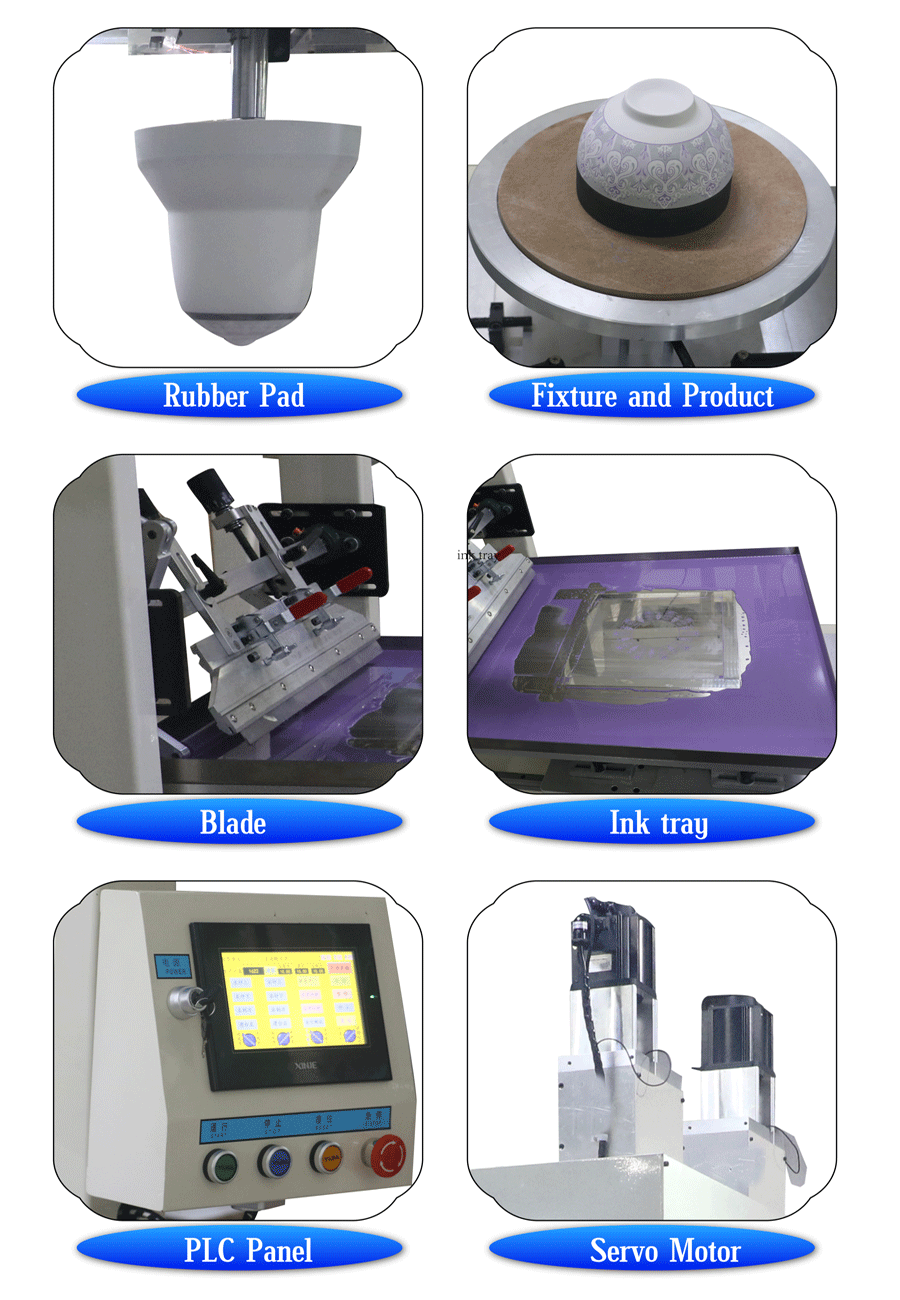
Selection and adjustment of the rubber head
When the rubber head transfers the pattern from the flat steel plate to the product surface, the size will usually be shortened, and the shortening ratio must be controlled by constantly adjusting the size of the steel plate so that the pattern is transferred to the product surface and just covers the printing area. The hardness of the rubber head of the ceramic pad printer is very soft, so when the rubber head is attached to the product surface, it often deforms greatly. By adjusting the pressure, the deformation can be controlled to a certain range, but the final deformation is still achieved by changing the pattern size of the steel plate.
Details
Data
|
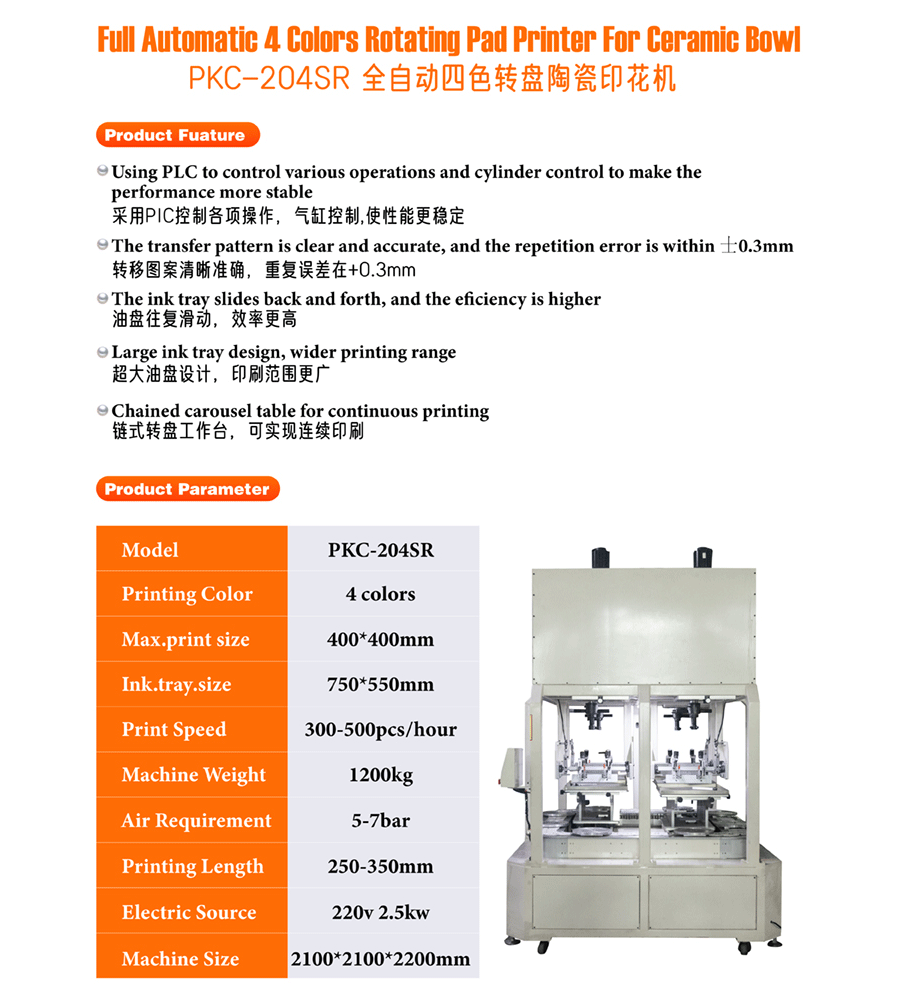
Servo Four colors ceramic tableware shuttle pad printer
|
|
Working table
|
shuttle workbench
|
|
ink try front-back stroke
|
700mm
|
|
Ink supply system
|
Open-type inkwell system
|
|
Plate type
|
0.5mm Thin steel sheet, 500*700mm
|
| Rubber pad controlling |
servo motor |
|
Operation panel
|
HMI screen
|
|
Works supply
|
- 1P 220V Power supply;
- 5-7Bar Compress air;
|
- Package dimension:1900×1900×2200mm
- Gross weight: 755kg
- CBM: 5.425
|
|
H.S.Code
|
8443198000
|
CE
|
Catalogue
How to pad printing bowls with ceramic pad printer?
Bowls are common tableware. Ceramic pad printers must be used to print on the bottom and concave surface of the bowl. Ceramic pad printers are pad printers that cause the rubber head to undergo large deformations in the up and down strokes and the diffusion directions around.
1. Pretreatment of bowls
Ceramic bowls may have residual oil, dust or release agents on the surface. They need to be wiped with alcohol or special detergents. Confirm the material of the bowl (such as overglaze porcelain, underglaze porcelain), and perform surface activation treatment (such as flame treatment) to enhance viscosity.
2. Fixtures
When printing the concave surface of the bowl, a fixture should be made so that the concave surface faces up. When printing the bottom of the bowl, a fixture should be made so that the bottom of the bowl faces up. In order to avoid scratching the bowl, the fixture can be made of silicone material. The fixture should avoid the bowl from deflecting and shaking. There should be no sharp edges around the fixture to avoid scratching the rubber head.
3. Rubber head:
The rubber head should be soft enough and tough enough. It should be able to press down to the concave surface of the bowl and wrap the bottom of the bowl. The stroke of the rubber head pressing down should be able to print the complete pattern. The pressure of the rubber head is a sensitive parameter. Too much pressure can easily damage the rubber head, and too little pressure may cause broken lines and incompleteness. Servo-controlled ceramic pad printers can set the pressure of the rubber head through precise data. Ceramic pad printers do not recommend too high speeds, because the pressing and lifting of the rubber head requires repeated friction and separation with the bowl. The speed should be kept low to avoid impact.
4. Ink
High-temperature resistant ceramic special inks (such as overglaze color inks) should be used. After printing, they can be cured by baking (usually 600-800℃) to ensure that the pattern is scratch-resistant, acid-resistant, and meets food contact standards (such as FDA certification). Adjust the ink concentration according to the printing area. Too thin inks are easy to smudge, and too thick inks will cause rough edges of the pattern. Multi-color pad printing involves overprinting of multiple colors of inks. Due to the large deformation of the rubber head, the pattern should avoid lines that are too close and overly complex designs in details.
5. Curing
After printing, it needs to be dried naturally to avoid ink smearing, and then high-temperature baking is carried out according to the ink requirements. The baking temperature and time need to be strictly controlled (for example, the overglaze ink needs to avoid discoloration caused by excessive temperature).